Get Full Government Meeting Transcripts, Videos, & Alerts Forever!
Get email alerts on the Zoning topic
No spam. Unsubscribe anytime.
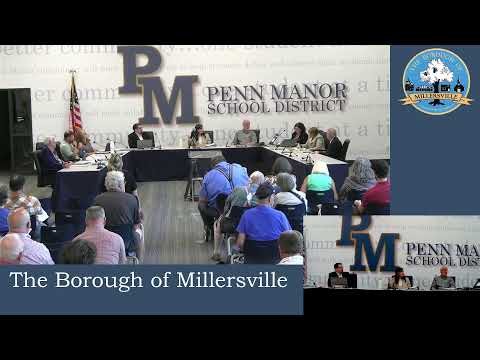
Millersville council approves text amendments to TND zoning after hours of public comment
Summary
After a public hearing marked by lengthy resident opposition on traffic, sidewalks and freestanding apartment buildings, Millersville Borough Council approved amendments to Traditional Neighborhood Development zoning to allow standalone multifamily buildings, passing the measure 6–1.
Millersville Borough Council approved amendments to the borough's zoning code that alter area and bulk requirements for the Traditional Neighborhood Development (TND) district, allowing some multifamily units to be constructed as freestanding apartment buildings rather than solely above first-floor commercial.
The approval followed a public hearing in which dozens of residents and community stakeholders spoke. Supporters, including the Lancaster County Planning Department, said the changes align with county and borough planning goals for housing diversity and connectivity. Opponents warned the amendments conflict with Millersville's recently adopted comprehensive plan, would increase traffic and safety concerns along Route 741, and could permit buildings they described as incompatible with surrounding neighborhoods.
The ordinance amends chapter 380 of the borough code to refine dimensional and interpretive rules for TND areas and to provide design flexibility for developers. Brandon Williams, speaking for petitioner Garmin Builders of Lancaster LLC, said the tract is roughly 60 acres and described the proposal as a "practical" set of refinements intended to preserve open space and reduce the intensity of development compared with an alternative buy-right commercial plan. Williams and the site designer said the proposal would generate about 1,500 fewer vehicle trips per day than what could be built under the current ordinance's buy-right scenario.
County planning staff deputy director John Hershey told the hearing that Lancaster County Planning found the amendments consistent with Places 2040, the Growing Together regional plan, and Millersville's 2023 comprehensive plan; he said the changes encourage mixed-use patterns, housing diversity and nonautomobile connectivity.
Many residents contested those claims. Speakers raised repeated concerns about traffic and cut-throughs in adjacent neighborhoods, pedestrian safety and the absence of guaranteed sidewalks on Route 741, potential impacts on schools and emergency services, and the condition of local septic and water infrastructure. Several speakers urged council to table the amendments or to remove language that would allow freestanding apartment buildings; one attendee said four freestanding apartment buildings would total 96 units under the plan in front of council.
Developer representatives and their counsel responded that the amendments emerged after nearly two years of discussion with borough staff and the planning commission, and that the proposed plan is a compromise intended to reduce commercial space and vehicle trips while preserving open space. The site designer clarified the 1,500-trip figure as a comparison to the volume that a buy-right commercial plan would generate, not as an assessment of net new trips from the proposed development alone.
Following the public comment period, council closed the hearing, moved to consider the ordinance and, after discussion that weighed housing supply and community character, put the measure to a roll-call vote. The motion to amend the zoning ordinance passed by a 6'to— tally. The transcript provided for this report did not specify an exact meeting date in the record provided; the public notices cited in the hearing were published in late May and June as part of the required MPC process.
Council members and staff said subsequent permitting steps remain: if the ordinance is enacted, development proposals would still require conditional-use review, subdivision and land-development approvals, PennDOT review for road access, stormwater permits and other standard approvals before construction could proceed.
What happens next: with the text amendments adopted, the petitioner may move forward with conditional-use review and PennDOT traffic planning. Council members said they expect further site-specific reviews where issues raised at the hearing'including sidewalks, traffic mitigation and utility capacity'will be examined in greater technical detail.