Get Full Government Meeting Transcripts, Videos, & Alerts Forever!
Get email alerts on the Land Use Development topic
No spam. Unsubscribe anytime.
Ashland planning board continues Mill Pond subdivision, hears traffic and environmental reviews
Summary
The Ashland Planning Board continued consideration of the Mill Pond subdivision and site-plan applications after technical presentations on engineering, traffic and environmental assessments and extensive public questions about notice, access and contamination. The board set Feb. 6 for further review.
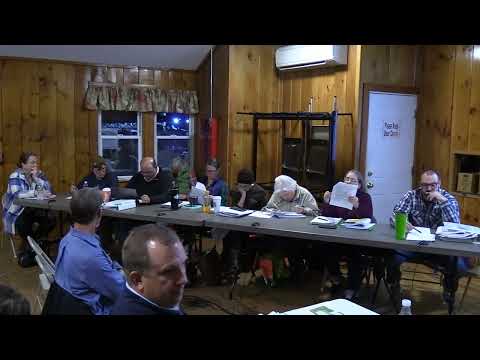
The Ashland Planning Board on Thursday continued review of applications for the Mill Pond subdivision and an associated multifamily housing site plan after hearing technical briefings and public concerns.
Applicant engineers said they resubmitted updated plans on Nov. 21 and provided new survey work that redefines the pond reference line and reduces the parcel to about 27.87 acres. Kevin Leonard of Northpointe Engineering told the board the firm added detailed topography at the proposed wetland crossing and will add an easement-based access route so the dam operator can bring equipment to his property. Leonard said the team will supply written responses to a 17-page engineering review and expects additional department-head comments.
The project as presented would include roughly 76 multifamily units in multiple buildings, a 1,000-square-foot community room, playground and about 175 parking spaces, eight of them handicapped. Leonard described a phased build: Phase 1 extends Mill Pond Lane, installs utilities and builds an initial set of residential buildings; Phase 2 would complete remaining units and the community room.
Frank McQueen of Hemming Valley Habitat described a partnership for four donated lots that Habitat would develop as affordable single-family homes; he said recent houses built by Habitat in the region sold for about $135,000 and that partner families perform sweat equity. McQueen said the Habitat parcels are phase 3 and their timing depends on the larger project's schedule.
A traffic study by Jeffrey Durek of Vanessa & Associates estimated the development would generate about 37–46 peak-hour vehicle trips; Durek said the project is unlikely to meet state signal warrants and recommended driveway placement, turning radii and coordination with the N.H. Department of Transportation. The applicant said it will add hydrants, upgrade an 8-inch water main and provide closed drainage to a multi-bay gravel wetland treatment area.
Residents and board members pressed the applicant on notice and process, cut-through traffic, the size of turnaround areas for emergency vehicles and school buses, sidewalks and parking during park events. Several residents asked about preserving a publicly used snowmobile corridor (Corridor 8) that crosses the property.
The meeting also included a lengthy environmental briefing by Tim Anderson of Novus Group, who summarized a Phase I environmental site assessment. Anderson reported historical urban fill, evidence of past controlled burns and waste piles, and prior groundwater sampling that found arsenic, lead and chromium above state ambient groundwater standards in some wells. He recommended a Phase II investigation with test pits, additional monitoring wells and waste-pile characterization and said the work is being coordinated with New Hampshire DES and EPA through a Brownfields grant.
Several residents raised safety and health concerns, especially for children who might access Mill Pond. Anderson said that if regulatory thresholds are exceeded the results become part of DES files, that deed-based activity-use restrictions and groundwater management permits are tools regulators use, and that remediation or long-term engineering controls would be planned to mitigate exposure if needed.
After presentations and public comment, the board requested additional materials, including department-head responses, a fiscal-impact study (including school impacts), any revised engineering responses and updated traffic data. The applicant agreed to provide the requested materials in advance of the next hearing. The board voted to continue the applications to Feb. 6 at 6:30 p.m.
What happens next: the applicant will file written responses to the Brown Engineering review and provide the additional studies the board requested; the Phase II environmental work Novus described is expected to follow regulatory review and public reporting.