Get Full Government Meeting Transcripts, Videos, & Alerts Forever!
Get email alerts on the Food Service Snows Mountain topic
No spam. Unsubscribe anytime.
Board leaves Snows Mountain zone closed to new food-service uses; opts for harder approval path for food trucks
Summary
After extended debate about food trucks and accessory food-service uses in the Snows Mountain special zone, the planning board voted to leave the use box blank (making future food-service proposals subject to variance or application processes rather than a special-exception shortcut). The board also agreed to clarify accessory-use language for community fundraisers.
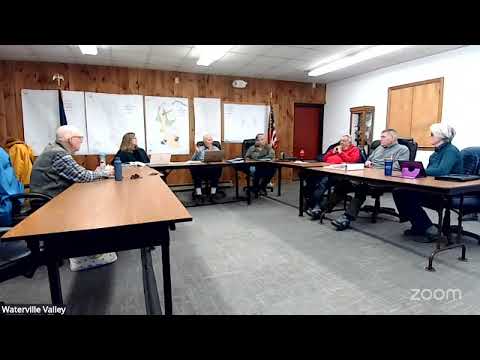
Waterville Valley’s Planning Board spent a substantial portion of its meeting debating whether to allow food-service activity—ranging from occasional nonprofit fundraisers to longer-term food-truck operations—in the Snows Mountain special zone.
Liz (speaker 1) and staff member (speaker 8) walked the board through proposed edits that replace the term "restaurant" with "food-service establishment" and add accessory-use language to cover events in civic buildings. Margaret (speaker 6) and others raised concerns that allowing broader food-service access in Snows Mountain would invite commercial activity in an area that was originally created for educational/dormitory uses.
The board discussed three options: leave the Snows Mountain use box blank (no permissive right), allow food service by special exception (SE) through the zoning board, or permit accessory uses broadly. The example of a multi-month resort food-truck proposal that drew objections earlier in the year framed much of the discussion: members worried about odors, noise, permanent conversion to a commercial use, and lack of nearby sanitary facilities.
Chair (speaker 2) called for a practical decision point. After counting preferences around the table the board recorded a majority in favor of leaving the Snows Mountain food-service use box blank; the chair summarized the tally as "Blank wins 1, 2, 3, 4 against 1, 2, 3." That outcome means future food-service proposals in the special zone will generally require either a variance or a case-by-case application to the ZBA rather than automatic approval as a special exception.
Liz said the ZBA route (special exception or variance) gives neighbors and the town an opportunity to evaluate impacts such as parking, temporary sanitary facilities or other mitigation. Chief Dave Noyes (speaker 11) and others noted the permitting process already allows the town to require necessary health and safety measures during permitting.
The board asked staff to clarify the draft’s accessory-use language to explicitly exclude routine nonprofit and community fundraisers only if that change would not conflict with state definitions; members also requested that food-truck permitting practices specify necessary sanitary and trash controls as part of the review when an application seeks a longer-term presence.
The decision was procedural: the board did not adopt a new ordinance at the meeting but determined the approach that will be reflected in warrant language and will be addressed at the upcoming public hearing.