Get Full Government Meeting Transcripts, Videos, & Alerts Forever!
Get email alerts on the Humanitarian Aid topic
No spam. Unsubscribe anytime.
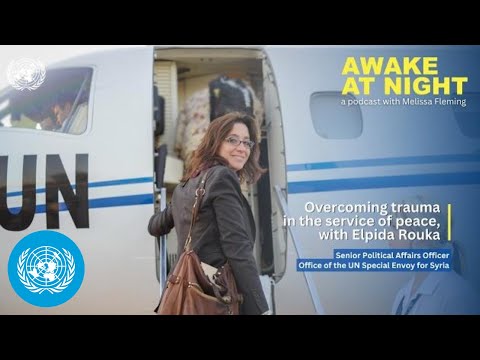
UN political affairs officer Elpida Ruka recalls Baghdad bombing, urges better mental-health support for aid workers
Summary
Elpida Ruka, a senior political affairs officer at the United Nations, described surviving the Aug. 19, 2003 Canal Hotel bombing in Baghdad, her long struggle with post-traumatic stress and the suicide of her brother. She urged colleagues to seek help early and called for attention to aid-worker mental health.
Elpida Ruka, a senior political affairs officer with the United Nations, recounted surviving the Aug. 19, 2003 truck-bomb attack on the UN Canal Hotel compound in Baghdad and described long-term post-traumatic stress that followed.
The attack, which the interview referenced as having killed 22 UN staff, occurred while Ruka was serving in the Iraq office. "I had very serious PTSD," Ruka said, describing days and months of shock, nightmares and a period when she could not sleep or read without being triggered.
Ruka told host Melissa in the Geneva studio that she had sought to be posted to Iraq early in her UN career and had been in the compound on what was meant to be the office's last day in Baghdad. She described the seconds after the blast—"you first feel the shake and the light and then the blast"—being knocked to the floor, exiting into a scene she called a massacre, and later being treated in a military triage facility. She said her first UN passport and a pair of broken glasses were among the few personal items recovered from her office.
Beyond the physical injuries, Ruka said the psychological toll was severe and long-lasting. She recounted losing her younger brother, Yanis Dawn, to suicide a decade ago, and said that bereavement pulled latent war-related trauma to the surface. She described trying multiple therapies, brief pharmacotherapy and work with therapists across languages when she sought help in Switzerland. "Suicide will not have the last word on my brother," she said, describing how she has been vocal about suicide, depression and stigma in professional life.
Ruka also reflected on how the Canal Hotel bombing reshaped the United Nations. "The UN blue flag is no longer sacred," she said, arguing the organization became more securitized while struggling to preserve its mandate to serve people in conflict zones. She said the attack triggered internal debates about the UN's purpose and the balance between safety and mission.
Despite the losses she described and years of exposure to conflict in Iraq, Afghanistan, Palestine and Syria, Ruka said she remains committed to diplomacy and humanitarian work. She credited human connection for sustaining hope and urged her colleagues to seek help early: "Breathe. Breathe and seek help when something terrible happens," she said. Ruka told Melissa she would choose the same path again, but with the caveat that people should take care of their mental health and not carry trauma alone.
The interview, recorded in Geneva, folded Ruka's personal testimony into broader reflections about institutional change at the United Nations and the need to prioritize mental-health care for aid workers. The host closed by thanking Ruka for sharing her experience and advice.