Get Full Government Meeting Transcripts, Videos, & Alerts Forever!
Get email alerts on the Fire Services topic
No spam. Unsubscribe anytime.
Spokane fire chief outlines staffing crunch, wildfire mitigation and new regional HAZMAT role
Summary
Fire Chief Tom Williams told a District 2 town hall that the department faces recruiting challenges, has expanded behavioral-response and single-role paramedic programs, has treated large tracts of land with mitigation grants, and accepted a regional HAZMAT assignment for northern Idaho.
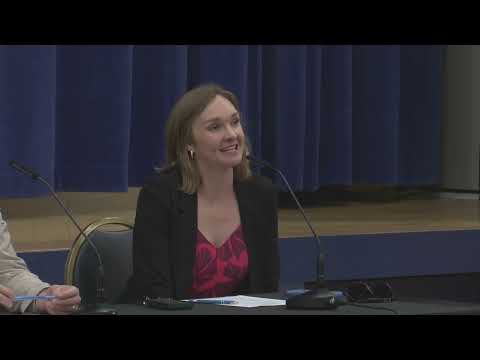
At the District 2 public-safety town hall on May 24, Fire Chief Tom Williams briefed residents on staffing, response patterns, wildfire mitigation and regional responsibilities.
Williams said Spokane Fire—s most recent recruit academy started with 20 candidates and 12 remained, and that recruiting remains difficult. He noted the department—s female firefighter representation is low (about 8 percent) and asked for community help recruiting more women into the fire service.
The department has expanded its Behavioral Response Unit; Williams said it now operates roughly five to six days a week for 10 hours a day. He also described a new single-role paramedic position — Spokane firefighters assigned exclusively to paramedic duties to concentrate on advanced-life-support calls.
Williams gave District-specific figures the department tracks: he said District 2 had about 7,032 responses so far this year and reported 21 brush fires in the district. He said the department has used grant funding to treat large acreages for wildfire mitigation and that those funds are running low; the exact acreage figure in the spoken remarks was unclear in the transcript and Williams offered to share mitigation maps by email.
The fire chief said the Idaho Department of Emergency Management designated Spokane as the Hazardous Materials (HAZMAT) response team for Northern Idaho and that the city accepted resources to support that regional role. Williams described the arrangement as an early regional HAZMAT partnership in the state.
On Station 5 in the Latah Valley, Williams said a fully equipped new station would cost roughly $16 million; he also noted that during warm months the city places a Type 1 engine at that location and that officials continue to pursue funding and partnerships to address coverage gaps.
Williams encouraged residents to contact the department for mitigation information and offered to share maps of treated areas and other mitigation work.
The chief—s presentation and subsequent Q&A reflected an emphasis on cross‑agency partnerships, recruitment needs and expanding specialized units to manage medical and behavioral-health demands.