Get Full Government Meeting Transcripts, Videos, & Alerts Forever!
Get email alerts on the Water Infrastructure topic
No spam. Unsubscribe anytime.
Council considers up to $10,000 to extend 420 West Main water line to new valve
Summary
Council members heard that the contractor has reached about 620 feet of pipe on the 420 West Main project and asked permission to extend an additional ~100 feet to reach a newly installed valve for up to $10,000 to avoid remobilization; a motion to approve funding from water revenue (with reserves as backup) was made but no vote is recorded in the transcript.
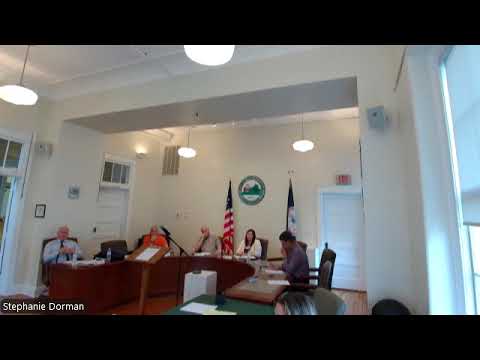
At tonight’s Louisa Town Council meeting, members and staff discussed an update to the 420 West Main water-line repair and a request to authorize up to $10,000 to extend the contractor’s work roughly 100 feet so crews can tie into a newly installed valve, officials said.
Staff provided the update, saying the contractor has completed about 620 feet of the run and that extending to the valve now would avoid a costly remobilization later. "Contractor is about to complete the original scope... that'll be around that'll be around 74,000 when we talked about the 75,000," the staff member said, adding the additional footage and associated labor would cost about $10,000 and that a $2,800 pipe-cutting fee is included in the forecast.
The staff member and on-site crew explained the valve placement was moved to isolate service for nearby residences during construction. "We placed the isolation valve... so that Epperwood weren't staying in water during the construction, it shorted us at a 100 feet," a public works staff member said, describing why the job stops short of the valve and why finishing the extra footage now makes operational sense.
Council members pressed on budget and service details. Finance-related staff noted the town’s February report showed a water-fund surplus of about $237,000 but cautioned that supplies and operating line items are running over and that a forecast may require moving funds or using reserves. "It's gonna be tight... we may need some reserves," staff said.
Committee member (the motion-maker) proposed the funding motion and then amended it to specify the money come first from water revenue and, if necessary, from water reserves. "I motion to approve about $10,000 ... to provide the valve with funds from the water revenue. And if we can't do that, we're from reserves water reserves," the committee member said. The motion was seconded on the record in the meeting, but the transcript does not record a final vote tally or outcome.
Participants also discussed potential impacts to nearby properties, including a car wash and two other parcels that could be isolated during work, and described options to maintain service to any single affected customer. Staff recommended follow-up work on a larger CIP (Capital Improvement Plan) to address adjacent stretches of aging pipe and to coordinate with CHA/GIS mapping to refine scope and costs before broader replacement work.
The meeting closed the discussion by asking staff to finalize a forecast and mapping and to return with refined CIP estimates; the motion to authorize up to $10,000 (with water revenue or reserves identified as the funding source) remained on the table with no vote recorded in the transcript.