Get Full Government Meeting Transcripts, Videos, & Alerts Forever!
Get email alerts on the Surveillance topic
No spam. Unsubscribe anytime.
Residents urge Neenah council to end Flock camera contract as council moves to closed session
Summary
Dozens of residents told the Neenah Common Council this week that Flock automated license-plate readers misrepresented encryption and data practices, urged the city to end the contract and asked for open deliberations; the council voted to enter closed session to discuss litigation and negotiation related to the Flock contract and property matters.
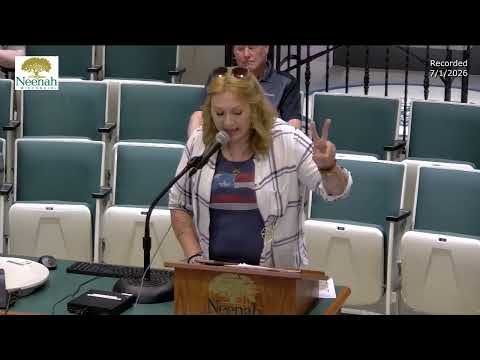
Dozens of residents urged the Neenah Common Council to cancel or more openly review its contract with Flock, the private vendor that provides automated license-plate reader (ALPR) cameras, and criticized the council’s decision to send portions of the topic to closed session.
At the public forum, Danny Flesnick, an independent candidate for Winnebago County sheriff, told the council that Flock does not provide end‑to‑end encryption and warned that images retained for algorithm training can be re‑identified. “Flock has lied and will continue to lie to everyone,” Flesnick said.
Nathaniel Miller, a Neenah resident, said the city’s process eroded public trust because the topic was added after a closed‑session discussion and because city officials had, in his view, not sufficiently addressed residents’ privacy concerns. “Trust is the core of this thing,” Miller said.
Software engineer Tanner Mann recounted committee meetings in which he said Flock sent sales staff rather than technical experts and alleged the company made false claims about encryption. Mann said he reviewed a legal response in which, he read, Flock acknowledged having decryption keys and argued the city should consider legal action or at least cover the cameras if the council chose not to terminate the contract. “I don’t think Flock is going to sue,” Mann said, but added that the city should not be intimidated from ending the contract.
Business owner Carrie Tetzlaff said she was offended that Flock trains law‑enforcement representatives in materials she described as an “Opposition Handling Playbook” and asked councilmembers to deliberate publicly before choosing replacement surveillance technology. Several speakers also raised Fourth Amendment and geofence‑warrant issues after a recent U.S. Supreme Court decision was discussed at the podium.
Council members acknowledged the public concerns. City Attorney Rashid said the public notice for the meeting permits the council to convene in closed session under Wisconsin Statute 19.85(1)(g) to confer with the city attorney and deliberate strategies concerning pending or impending litigation specifically regarding the Flock camera contract. After procedural discussion, the council voted to enter closed session; the motion passed on the floor with one recorded nay and the body moved to discuss litigation and property-negotiation matters behind closed doors.
What happens next: the council went into closed session to discuss negotiation and litigation strategy with counsel regarding the Flock contract and related property issues; the timing and substance of any formal action (contract termination, litigation, or coverage of cameras) were not decided in public before the meeting adjourned.
Provenance: public comments about Flock began with Danny Flesnick (public forum) and continued through multiple speakers; the city attorney read the statutory basis for closed session and the council voted to convene into closed session on the Flock contract and related property negotiation.