Get Full Government Meeting Transcripts, Videos, & Alerts Forever!
Get email alerts on the Visitor Policy topic
No spam. Unsubscribe anytime.
School-visit policy sent back for major edits after member and teacher concerns
Summary
The committee reviewed a draft school-visit policy that proposed advance-notice rules and time limits for visits; teachers and members urged clearer visitor definitions and less prescriptive language, and the committee voted to redraft the policy for another meeting.
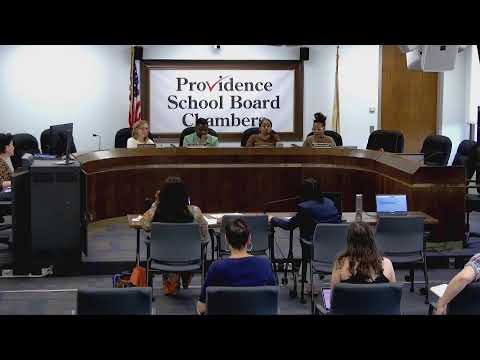
The Providence School Board policy committee reviewed a draft school-visit policy but concluded it needs substantial edits to distinguish routine classroom visitors from dignitaries and to avoid unnecessarily restrictive language.
Chair (speaker 1) introduced the draft, which proposed that visitors notify the superintendent and set a 30–45 minute expectation for visits. Staff member (speaker 6) said the draft followed superintendent protocol and Council of Great City Schools guidance, but committee members argued the draft read as a permission regime rather than an advance-notice practice. "It's not really permission. It's advanced notice," committee member (speaker 3) said, urging the language be changed so principals receive notice rather than permission being required.
A civics teacher, Kaylee Rockwell (speaker 7), told the committee the policy affects classroom curriculum: "I teach civics in particular. So this policy impacts my curriculum. ... having clarity on what a dignitary means would be helpful for me because I'm often inviting elected officials into my room." Members agreed to create clearer categories—community visitors, classroom-support visitors, and public officials/dignitaries—so routine curricular guests do not trigger superintendent-level approvals.
The committee voted to send the school-visit policy back for redrafting and to return a revised draft at the next policy meeting.