Get Full Government Meeting Transcripts, Videos, & Alerts Forever!
Get email alerts on the Zoning And Planning topic
No spam. Unsubscribe anytime.
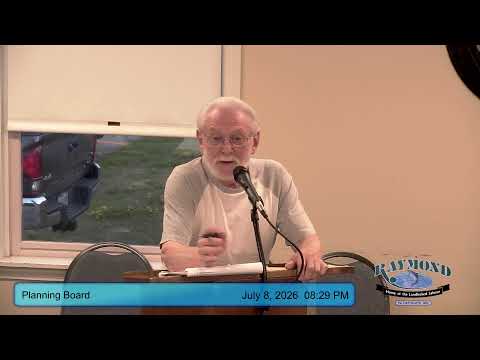
Planning Board workshop: revisit short-term rental rules, align ordinances with state ADU mandates
Summary
The Raymond Planning Board held a workshop to prioritize ordinance updates driven by state housing laws (including ADU allowances), examined a revised short-term rental approach focused on registration and data collection, and discussed a timeline and grant funding to get ordinance drafts to legal review before the 2027 warrant cycle.
The Raymond Planning Board used its July 8 workshop to map how it will respond to new state housing mandates, reconsider a recently defeated short-term rental ordinance, and identify zoning sections that need revision before the town—inalizes its 2027 warrant articles.
Board members said the short-term rental ordinance that failed in the recent vote appeared to have been misunderstood by voters and suggested a phased approach: begin with registration and data collection, then separately pursue noise and enforcement measures. The board expressed interest in reframing the ordinance to make initial steps simpler and more enforceable.
Why it matters: state legislation (discussed as LD 1829 and related mandates during the meeting) requires towns to permit additional ADUs and adjust subdivision/land-use definitions; Raymond must align many local ordinances (subdivision, shoreland zone, table of uses) with state requirements and new definitions.
Key workshop items: the board reviewed at least ten priority ordinance topics, including allowable ADUs per lot, driveway rules for multiple dwellings, manufactured-home allowances in village and shoreland zones, minimum-lot-size implications tied to subsurface wastewater rules, and possible design standards for HUD-type/modular homes. Staff recommended a zoning audit to identify conflicts with state law and prioritize edits.
Grant funding and timeline: members discussed a grant the town may use to offset ordinance-update costs (including paid consultants and reimbursing volunteer time); staff suggested aiming for a final draft by January so the town can send ordinance language to legal counsel and to MOCA for state/shoreland review ahead of the April warrant deadline.
Public comment and implementation: resident Jennifer Danzig urged the planning board to push the selectboard to activate the comprehensive plan implementation committee to help shepherd ordinance work. Peter Levitt urged stronger attention to enforcement and traffic issues tied to the comp plan, warning that without enforcement, growth-area changes could affect lakeshore areas. Board members asked staff to compile a comprehensive list of ordinances likely affected and to seek outside help (GPCOG or a zoning audit) if the grant can fund that work.
What the board will do next: staff will prepare a prioritized list of ordinance sections to edit, investigate grant options and GPCOG offerings for short-term rental registration software or audit services, and return with draft ordinance language for the board to review at upcoming meetings.
Notable quotes: "I think we might have more success if we came at it as a registration rather than an ordinance kind of trying to limit it too much," the Chair said, summarizing the consensus on a phased short-term rental approach.
Ending: The board asked staff to produce a comprehensive list of affected ordinances and to coordinate next steps with the selectboard and grant administrators so ordinance drafts can be routed to legal review on the town—alendar.