Get Full Government Meeting Transcripts, Videos, & Alerts Forever!
Get email alerts on the Healthcare Cancer Financing topic
No spam. Unsubscribe anytime.
Uganda pilot to tie cancer financing to measurable KPIs, Uganda Cancer Institute physicist says
Summary
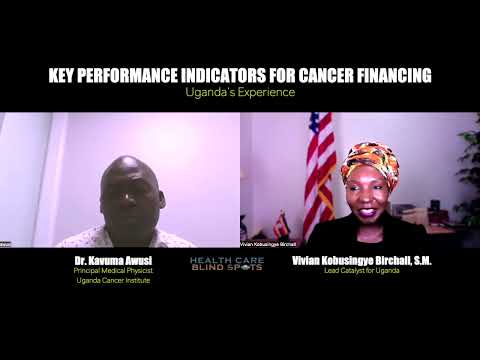
Kavma Aousi of the Uganda Cancer Institute described Uganda as the inaugural pilot for the Global Council financing platform and outlined three initial KPIs—cervical and breast screening and oncology training—intended to link financing to measurable outcomes and improve access outside Kampala.
Kavma Aousi, principal medical physicist at the Uganda Cancer Institute, said Uganda has been selected as the inaugural pilot for the Global Council financing platform and that the pilot will tie cancer financing to measurable key performance indicators to improve diagnosis, treatment and patient outcomes.
Aousi said the radiotherapy department at her center treated “about 3,000 new cancer patients last year,” and that nearly half of new patients require radiotherapy. "At our center, almost 40 percent of our patients are cervical cancer patients," she said, adding that breast cancer accounts for about 10 to 12 percent of cases.
The initial KPIs UCI developed for the pilot focus on three areas: scaling cervical cancer screening, expanding breast cancer screening, and building oncology training—particularly nurse training and retention. "These are measurable values used to track progress toward specific institutional goals," Aousi said of KPIs, explaining they help align activities, support decision-making and allow costs to be tied to expected outcomes.
Aousi highlighted access and capacity challenges that the KPIs are intended to address. Radiotherapy services are concentrated in Kampala, she said, while patients travel from distant regions such as Gulu, Mbarara and Arua—places she cited as being up to about 400 kilometers from the capital. Long treatment courses often require patients from rural areas to stay in Kampala for weeks or months, creating financial and logistical hardship.
On costing and program design, Aousi listed categories that the KPIs must account for: labor, consumables, screening, training, social mobilization and waste disposal. She said establishing local training programs for oncologists, radiation oncologists, medical physicists and radiation therapists would be a longer‑term KPI expansion area, along with measuring radiotherapy equipment counts and diagnostic imaging capacity.
Aousi described the pilot as the first of its kind and said the Ugandan government has embraced the approach. "If we succeed, we are going to publish papers, and other countries are also going to embrace the same idea," she said, noting that publication and dissemination will be important if the model is to be adopted elsewhere.
The interview closed with Aousi expressing optimism about launching the KPI procedure and studying the pilot’s results to inform broader adoption. The immediate next steps she cited are inauguration of the KPI process and subsequent dissemination of the pilot findings.