Get Full Government Meeting Transcripts, Videos, & Alerts Forever!
Get email alerts on the Capital Improvement Program topic
No spam. Unsubscribe anytime.
Finance committee recommends 2026 capital-improvement plan, citing modest borrowing impact
Summary
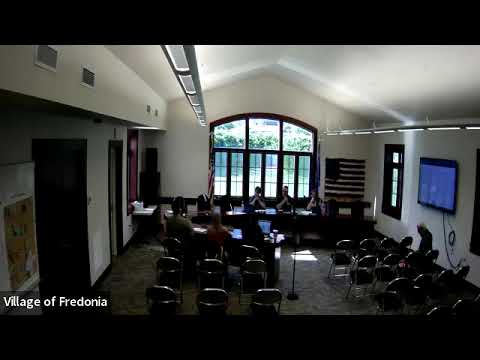
The village finance committee voted unanimously to recommend the proposed 2026 Capital Improvement Program to the full board after staff outlined prioritized projects, equipment replacements, road reconstruction choices and projected debt-service impacts.
Administrator Jenkins told the Village Finance Committee that staff had pared an initial roughly $3,000,000 list of possible capital projects down to a smaller set of priorities for the 2026 budget and presented the recommended two-year borrowing plan and cash-funded projects.
Jenkins, the village administrator, explained how the village categorizes capital improvement projects (CIP) and noted the staff organized a five-year rolling CIP and a two-year borrowing cycle to capture efficiencies when borrowing. "CIP ... is something that is typically worth $10,000 or more in value, and it has a lifespan of more than 5 years," Jenkins said, adding that this year's initial asks had been trimmed through conversations with department heads and financial advisors.
The presentation described a mix of borrowed and cash-funded work. Staff proposed borrowing for larger items in a two-year bonding schedule; cash-on-hand projects included a crosswalk at Fillmore and Fredonia, replacement of a brine tank, a lawnmower, a UTV with cab and plow, and municipal parking-lot resurfacing. Jenkins said increased sewer rates have improved the utility's reserves enough to fund certain maintenance without borrowing, citing a roughly $110,000 sewer maintenance item for the glass-sludge storage tank as an example.
On roads, Jenkins said a Wheeler Street reconstruction that began as a roughly $500,000 estimate rose to about $1,000,000 when engineers priced work under federal railroad tracks, so staff recommended shifting to Washington Avenue as the more feasible next reconstruction project. "Going under federal railroad tracks are an expensive deal," Jenkins said when describing the revised estimate.
Operational equipment requests reviewed included a mini excavator to reduce recurring rental costs and increase efficiency for sidewalk and utility work; Eric, a staff member who answered technical questions, said the mini excavator would provide maneuverability and a 20-year service life compared with heavier backhoe work. The committee discussed used versus new equipment pricing, resale or trade-in considerations, and anticipated maintenance costs for the existing fleet.
Jenkins walked members through a chart showing projected debt-service impacts and explained the village's self-imposed debt limit of 5% of equalized value. Using an estimated village valuation of about $274,000,000, Jenkins said a 5% borrowing cap would be about $13,700,000. He told the committee current metrics keep the village well under that cap and that the proposed borrowing was designed to limit upward pressure on the mill rate.
A committee member moved to recommend the 2026 CIP requests to the village board; the motion received a second and passed by unanimous voice vote. Jenkins told the committee the full board will consider the recommendation and that a formal bonding process and the draft budget review will follow in the coming months.
The committee also noted the long-range need to replace a fire ladder truck, a major capital item discussed as a future priority; fundraising and vehicle trade-ins were mentioned as options to manage the eventual cost.
The finance committee adjourned after setting a timeline for the draft budget review and follow-up meetings.