Get Full Government Meeting Transcripts, Videos, & Alerts Forever!
Get email alerts on the Housing Resilience topic
No spam. Unsubscribe anytime.
UNDRR chief: 'Resilience starts at home' — cities must invest in resilient housing now
Summary
At the SDG Media Zone, UNDRR head Kamal Shor said housing accounts for a large share of disaster losses and urged investment in resilient construction, arguing upfront resilience costs far less than retrofits or rebuilding after disasters. He also called for citizen-led priorities and clearer resilience metrics to unlock financing.
Kamal Shor, special representative of the UN secretary-general for disaster risk reduction and head of the United Nations Office for Disaster Risk Reduction (UNDRR), urged cities to prioritize resilient housing, saying that housing accounts for a substantial share of disaster losses and that building to withstand hazards is both socially and economically sensible.
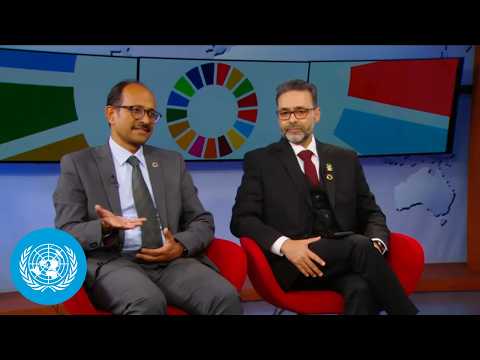
Speaking on CGTN’s SDG Media Zone, Shor said recent earthquakes showed 40 to 60% of losses can be in the housing sector, and he argued that “when you are building a new house, making it resilient costs only a few percentage more, you know, 5% more” compared with construction that does not account for future risk. He warned that retrofitting existing structures is far costlier — “20% to 30% more” — and rebuilding after disaster “costs a 100% more.”
Shor framed resilient housing as part of a broader push to close a global housing gap while ensuring new construction is not built for past risks. “We must ensure that housing is built not for the past risk, but for the future risk,” he said, urging households to ask builders whether a home is resilient to hazards such as earthquakes and floods.
He said progress is uneven: many cities are doing important work and UNDRR’s ‘‘making cities resilient by 2030’’ campaign has nearly 2,000 members, but overall investment is not keeping pace with rapid urbanization and, in some places, cities are expanding into flood zones or constructing built environments that increase heat exposure.
Shor also emphasized the role of citizens in setting priorities. He described city resilience as a ‘‘ground-up consensus’’ and said metrics that precisely measure resilience will help attract private finance by reducing uncertainty for investors: “We need more transparent, more uniform metrics of resilience so that investing in resilience for investors, including private investors, becomes attractive.”
Context: The segment tied these themes to the Sendai Framework for Disaster Risk Reduction and to this year’s International Day for Disaster Risk Reduction, whose theme the hosts noted as “resilience starts at home.” Shor said the aim is to spark a conversation that pushes both governments and households to make resilient choices during construction and purchasing.
The interview closed with Shor urging that cities be empowered to access finance and to exercise leadership in global forums such as the United Nations; he noted an IPCC special report on cities expected early next year and said cities should have “direct access to finance.”