Get Full Government Meeting Transcripts, Videos, & Alerts Forever!
Get email alerts on the Tax Incremental Districts topic
No spam. Unsubscribe anytime.
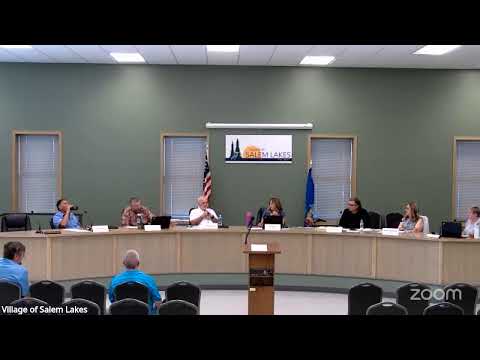
Salem Lakes EDC debates limits and trade-offs of tax-incremental districts
Summary
In a broad discussion, the EDC weighed the potential benefits of TIDs for commercial growth against long-term infrastructure costs for residential projects, and considered developer payment agreements to reduce taxpayer risk.
The Village of Salem Lakes Economic Development Committee held a broad discussion of tax incremental districts (TIDs), focusing on how to structure them to support commercial development while limiting long-term costs to taxpayers.
A committee member warned that residential projects can impose higher infrastructure burdens—roads, sewer and emergency services—and used a hypothetical example to illustrate long-term costs: "Let's just choose an easy number like 300,000 of cost to the village each year times 20 years. That's $6,000,000 plus all that depreciation of roads, sewer, and that that will be land on our lap after 20 years," they said, urging careful analysis of recovery mechanisms.
The group discussed developer payment agreements (DPAs) as a tool to recoup village expenditures during a TID's life and noted that commercial projects typically place less long-term demand on municipal services than residential developments. Members stressed the need for public education on when a TID is appropriate and how benefits and costs will be measured and communicated.
Committee members recommended a case-by-case approach, careful modeling of long-term maintenance and replacement costs, and workshops to educate the public about trade-offs. The EDC agreed that any future TID discussions should be informed by the forthcoming SWOT analysis and additional financial modeling prior to any board-level decisions.