Get Full Government Meeting Transcripts, Videos, & Alerts Forever!
Get email alerts on the Early Childhood topic
No spam. Unsubscribe anytime.
New Hanover County pre-K officials report full health screenings and rising waitlist
Summary
Jessica Mullins, representing New Hanover County Schools’ county‑funded Pre‑K program, told commissioners the program served 111 county‑funded students, held 45 family engagement events reaching 3,497 people, completed health screenings for all students and closed the year with a waitlist of 248 children.
Jessica Mullins, representing New Hanover County Schools’ county‑funded Pre‑K program, told the Board of Commissioners that the program served 111 county‑funded students this school year and provided broad family engagement and health services.
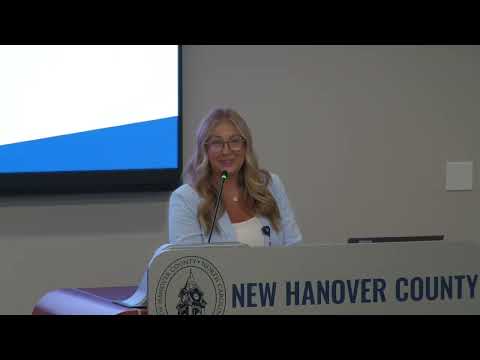
"My name is Jessica Mullins, and I will be representing the New Hanover County Schools Pre k program this morning," Mullins said as she opened the briefing. She said the program held 45 family engagement events that served 3,497 people and operated county‑funded slots at four sites: Blair (36), Murrayville (36), Howe (18) and Johnson Pre‑K Center (18).
Mullins reported that while 111 students were served over the course of the year, classrooms typically had about 108 students in attendance at any one time. She said three students withdrew during the year because they moved or found child care outside the county and that staff were able to fill those slots with other 3‑ and 4‑year‑olds.
Health and developmental screenings were a key focus of the presentation. Mullins said required health assessments and vision and hearing screenings were completed for all enrolled students. She said nine students were referred after vision screening and two received glasses; five students were referred for further hearing evaluation. Mullins also said the program identified 15 students with individualized education plans (IEPs), including 10 who were newly identified while in the program.
Mullins highlighted academic outcomes tied to the county’s target: "Our goal is to have 75% or more students by the end of the year meeting or exceeding widely held expectations, and we did meet that goal," she said, noting this was the fourth consecutive year the program met the metric.
On family engagement, Mullins said county‑funded families viewed 594 ReadyRosie videos designed to involve parents in early learning. She also described partnerships with community providers: mental‑health referrals to Coastal Horizons (11 referrals) and training from Child First staff to build staff capacity for family support.
Commissioners praised the program. "It's a way to get kids ready for kindergarten and beyond," Commissioner Walker said in response, adding that restoration of funding last year was important and expressing hope to expand services.
Mullins closed by noting the program’s year‑end waitlist: "At the end of the year, we had 248 students on a wait list — 240 of them were 3‑year‑olds and 8 were 4‑year‑olds," she said.
The board thanked Mullins for the report and moved on to consent items.
Ending: The presentation framed county Pre‑K as a multi‑year program with stable outcomes, broad family engagement and continued demand reflected in a substantial waitlist; commissioners indicated interest in sustaining and possibly expanding the program.