Get Full Government Meeting Transcripts, Videos, & Alerts Forever!
Get email alerts on the Human Services Funding topic
No spam. Unsubscribe anytime.
Central Ohio leaders warn human-services funding, housing and nonprofits will be strained without new investments
Summary
Panelists at a Columbus Metropolitan Club forum discussed a new regionomic study projecting rising demand for human services through 2050, highlighted a near-term funding gap, and urged coordinated local funding strategies including philanthropy, bonds and housing acceleration.
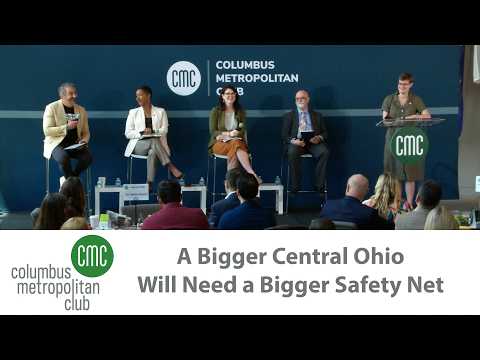
At a Columbus Metropolitan Club forum, local leaders reviewed a new regionomic study and urged immediate, coordinated investment to meet growing human-services needs across Central Ohio.
The study, presented and discussed by nonprofit and city leaders, projects that roughly 90,000 people at 200% of the federal poverty level or below could call Columbus home by 2050 and identified a substantial ongoing funding shortfall. "We need more money. Period," said Michael Kory, executive director of the Human Service Chamber of Franklin County, calling for both near-term and sustained revenue to stabilize service delivery.
Why it matters: Panelists from the nonprofit sector, city government and research organizations told the forum that rising demand, federal benefit rollbacks and flat or shrinking local resources are combining to strain shelters, youth programs, elder-care supports and other essential services. Council member Melissa Green said the report shows a funding gap of nearly $200 million a year (a figure cited in the study's March 2025 snapshot) and warned the city must change how it invests to avoid worsening instability for residents.
Key findings and local implications: Panelists summarized the report and discussed practical effects on service providers. Michael Kory described the nonprofit sector's scale in Franklin County (figures cited in the forum: roughly 22,000 nonprofit workers generating about $2 billion in annual impact and serving about 1,000,000 people) and urged a multi-pronged response to rising costs. Dr. Bill Lafayette said elder care funding currently relies heavily on unpaid family caregivers and recommended shifting to paying professional providers to prevent workforce pull-out and caregiver burnout.
Housing and homelessness emerged as a critical near-term squeeze. "We will need about 18,000 units per year," Lafayette said, contrasting that projection with roughly 13,000 units built last year. Panelists warned that delays in producing housing and policies that limit development will increase the number of households paying an unsustainable share of income for rent or mortgage, which in turn raises demand for emergency services.
Policy options discussed: Panelists and audience members outlined a range of local strategies: rethinking tax incentives; coordinating city, county and suburban municipal efforts; directing incentives toward needed job sectors; and mobilizing philanthropy. Kory suggested two big ideas under active discussion: a corporate-philanthropy model modeled on a Minneapolis-style 5% pledge and a community bond program to let residents and organizations directly invest in community priorities. Melissa Green said the city is forming a commission that will include philanthropic and nonprofit leaders to advise on funding strategies.
Quantifying returns: Forum participants emphasized that investments in human services can yield measurable economic benefits. Ria Cunningham, CEO of Boys and Girls Clubs of Central Ohio, said her organization's local analysis estimates about $17 returned for every $1 invested when accounting for avoided costs and increased caregiver earnings; panelists urged developing comparable metrics across programs to strengthen the case for new funding.
Federal context and immediate pressures: Michael Kory flagged recent and proposed federal changes that increase local pressure, including a cited reduction of about 4,000,000 people on SNAP over the prior year and projected cuts to Medicaid described during the forum. He also highlighted a bipartisan federal bill, the Road to Housing Act, as potential longer-term relief if enacted. In the near term, shelter providers said capacity has been strained: Melissa Green noted waiting lists reached roughly 599 during a recent heat wave and that shelter operators cited the need for about $25 million in sustained investments to meet current demand.
Audience concerns and tax-incentives debate: Live audience questions focused on affordable housing, homelessness and whether corporate tax abatements reduce the city's ability to fund services. Green said council members are scrutinizing incentive packages and that, in some cases, incentives helped retain large employers and jobs; she called for careful evaluation of long-term public benefit when deciding whether to approve abatements.
Next steps and access to the report: Panelists said the regionomic report was published and posted at humanservicechamber.org the day of the forum for readers who want the full data and projections. The panel urged a combination of city budget choices, philanthropy, intergovernmental coordination and new financing tools to address both immediate shelter needs and long-term investments in housing and human-services infrastructure.
The forum closed with a call to action from Sofia Pfiffner, president and CEO of the Columbus Metropolitan Club, urging attendees to carry the conversation back to their workplaces, philanthropic organizations and neighborhood groups so planning and investment can follow the study's projections.