Get Full Government Meeting Transcripts, Videos, & Alerts Forever!
Get email alerts on the School Budget topic
No spam. Unsubscribe anytime.
Old Bridge administrators warn of steep cuts unless state tax-levy aid is approved
Summary
District leaders presented a tentative 2025-26 budget showing a $17.95 million structural deficit and described a pending application to New Jerseys tax levy incentive aid program that would add $22 million in local levy revenue and $1 million in state aid; the board adopted a resolution to submit the application and will vote on final adoption May 13.
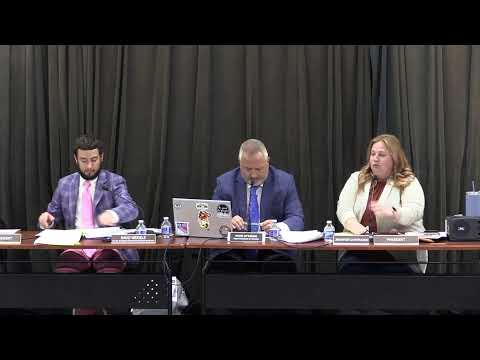
Superintendent David Sedadino and School Business Administrator David Wiedell told residents at the Old Bridge Township Board of Education public hearing that the district faces an acute fiscal shortfall for 2025-26 and outlined options that would either cut programs or raise local property taxes substantially.
"It was a really bad year to be a board member," Superintendent David Sedadino said, describing rising costs and last-minute state changes that have left districts scrambling. School Business Administrator David Wiedell told the board the district had identified a structural deficit of $17,946,798 in its tentative budget.
Wiedell described two budget paths presented to the board. The tentative budget, submitted for legal advertisement and balanced in part by steep reductions, would require roughly $18 million in expenditure cuts that the administration said could mean shorter high-school days, elimination of full-day kindergarten, reductions to security coverage, school closures and the loss of related-arts programming in elementary grades. Under that scenario, Wiedell said the school portion of taxes for a home at the districts average assessed value ($157,373) would rise about $267.20 annually.
The alternative rests on the states tax levy incentive aid (TLIA) program, a new mechanism the Department of Education is reviewing that would permit districts to increase levy authority above the standard 2% cap up to an amount reflecting a districts shortfall relative to adequacy. The district reported it was deemed under adequacy by $30,444,449 and initially adopted a resolution to apply for up to that amount; by an April 28 executive-session decision the application was revised to request roughly $23,000,000 in additional expenditures (about $22,000,000 in local levy and $1,000,000 in potential state aid).
Wiedell said the $23 million proposal would restore the $17,946,798 in cuts and reopen funding for programs the district had proposed to eliminate: full-day kindergarten, athletics, security coverage, some after-school transportation for academic supports on a modified schedule, additional special-education supports, a new science curriculum and capital work such as planetarium repairs. He cautioned the application remained under DOE review and that approvals were contingent on the states own budget process.
On the question of taxpayer impact, Wiedell said the TLIA scenario would increase the average homeowners annual school tax by about $728.66 (roughly $461.47 more than the tentative-budget scenario) if the application were approved and the board adopted the resulting levy authority.
Wiedell outlined how revenues declined versus last year (projected general-fund revenue of $162,040,895, about $6.2 million less than 2024-25) and cited limits on reserves and reductions in federal and other state funding as drivers of the structural deficit. He also gave an example of capital needs: district staff estimated specialized planetarium repairs at roughly $300,000 per facility, and said restored planetaria could become a future revenue source for field trips if a new science curriculum moves forward.
The board adopted a resolution approving submission of the revised TLIA application to the Department of Education, according to the presentation; the transcript does not record a roll-call vote or tally. The board scheduled the formal adoption vote on the 2025-26 budget at its May 13 agenda session.
The public-comment period was opened and closed with no speakers. The chair moved the meeting into executive session to discuss part of the superintendent search and the board adjourned to executive session without returning to the public meeting.
What happens next: the district awaits DOE action on the TLIA application and will hold the adoption vote on May 13. If the state does not approve the incentive aid, district administrators warned they would need to proceed with major cuts outlined in the tentative budget.