Get Full Government Meeting Transcripts, Videos, & Alerts Forever!
Get email alerts on the Ethics Recusal topic
No spam. Unsubscribe anytime.
Council member proposes measurable recusal standard for planning commissioners
Summary
A council member urged changing proposed recusal language for the planning commission from a subjective 'cannot fairly consider' test to a measurable standard—disqualifying commissioners who have "formed a fixed opinion prior to the meeting"—citing risk of prejudgment and SB 284 removal criteria; councilmembers expressed support and the item was proposed to be amended and considered further.
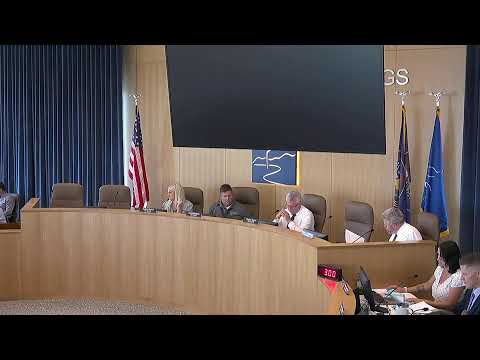
During business discussions at the July 7 Saratoga Springs City Council meeting, a council member urged revising the proposed recusal and removal language in the draft Title 3 code amendments and the planning commission bylaws to create a more measurable standard for disqualification.
The council member argued the current wording—allowing recusal if a commissioner "cannot fairly consider the evidence and testimony presented"—is subjective and hard to apply. "The commissioner has formed a fixed opinion prior to the meeting that is not susceptible to change, preventing an impartial evaluation of the evidence and testimony presented," the council member said, recommending language that could be demonstrated by external evidence such as pre-meeting emails or social media posts.
The speaker said the change would make it easier to enforce removal provisions tied to SB 284 and would both protect applicants’ rights to an impartial hearing and protect planning commissioners from unfair removal for holding opinions. Several council members voiced appreciation for the suggested language and its measurable focus.
A speaker in the meeting said they had reviewed the proposed language and described it as legally acceptable; the motion to adopt the amendment to the recusal standard was proposed during the discussion and appeared prepared to move forward for further consideration.
Why it matters: recusal standards determine when planning commissioners must step aside because of bias or prejudgment, affecting applicants’ rights, the integrity of quasi-judicial hearings, and potential legal exposure for the city.
Next steps: the council proposed adopting the amendment to the recusal language and would coordinate with the city attorney and staff on final wording and formal adoption; the transcript ends while the motion was being advanced and does not record a final vote on this amendment in the provided segments.
Speakers quoted in this article are identified by role (council member, mayor pro tem) to match attributions given in the transcript.