Get Full Government Meeting Transcripts, Videos, & Alerts Forever!
Get email alerts on the South Waterfront topic
No spam. Unsubscribe anytime.
South Waterfront level‑3 plan sent back to committee after split vote
Summary
A proposed South Waterfront development with a tunneled pedestrian connection drew sustained public opposition and a tied vote on conditional approval; the Planning Commission voted to send the application back to the Administrative Review Committee for more detailed alternative‑compliance justification and conditions.
The Knoxville Knox County Planning Commission on July 8 declined to approve a developer’s request for level‑3 alternative compliance for a South Waterfront project and instead sent the application back to the Administrative Review Committee for further work.
Ryan Robertson, the applicant, told commissioners the design responds to steep topography and includes a tunneled breezeway he said was necessary to provide accessible, north‑south pedestrian access across a challenging site. "We believe the plan before you thoughtfully incorporates that feedback while delivering a project that creates long‑term value for residents and patrons of South Knoxville," Robertson said.
Neighbors and neighborhood advocates sharply disputed the approach. Suzanne Trevella, speaking for nearby residents, said the proposed tunnel "is a subterranean tunnel that intentionally segregates the public from the residents of this development" and argued the design violates the form‑based code’s intent for visible, street‑level connections.
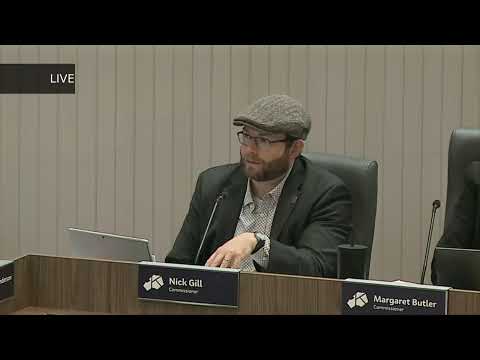
Commissioners spent more than two hours questioning whether the project meets the South Waterfront vision, focusing on topography, building articulation, ground‑floor activation and whether the proposed public access would be genuinely public. Commissioner Gill proposed four conditions to try to bridge concerns: recording a permanent public pedestrian access easement for the north‑south connection; establishing public hours with no gating (the commission discussed dawn‑to‑dusk as a possible compromise); installing permanent wayfinding signage and lighting; and requiring a traffic‑impact study be submitted and its recommendations incorporated before building permits are issued.
An amended motion to approve the project with those conditions produced a 5–5 tie on the floor and failed. With no majority for approval or denial, commissioners voted to return the application to the Administrative Review Committee so the developer and staff can produce item‑by‑item alternative‑compliance documentation and more specific mitigation measures for the commission and the public to review.
The commission’s action leaves the proposal alive but delayed: the developer and staff are expected to work with neighborhood advocates and ARC to refine the submission, then return to the Planning Commission with the committee’s recommendations.