Get Full Government Meeting Transcripts, Videos, & Alerts Forever!
Get email alerts on the Defense topic
No spam. Unsubscribe anytime.
DARPA official unveils "Lift Challenge" to spur heavy-lift drones that can carry four times their weight
Summary
A DARPA agency official said the agency launched the DARPA Lift Challenge to incentivize development of heavy-lift drones that can lift four times their own weight, arguing such advances could sharply reduce air cargo costs and enable new commercial and military uses.
An agency official with the Defense Advanced Research Projects Agency (DARPA) said the agency launched the DARPA Lift Challenge to push development of heavy-lift drones that can carry four times their own weight.
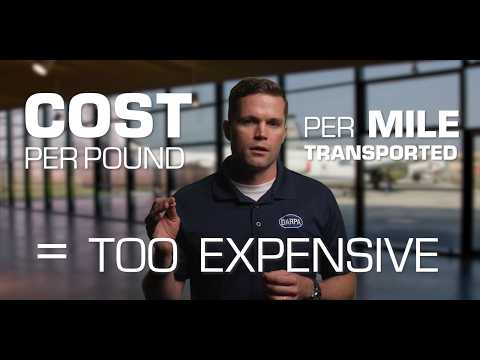
"At DARPA, we want to shatter that cost barrier," the agency official said, calling the goal "audacious" and urging innovators to deliver a 4-to-1 payload-to-weight ratio.
The official framed the program in historical terms, saying technologies reshape society only once they become affordable. They pointed to the automobile and the personal computer as examples and argued that the transition to reusable rockets similarly opened a large commercial space economy.
The Lift Challenge, the official said, aims to flip the economics of vertical lift. "Today, a highly specialized helicopter has about a 1 to 1 payload to weight ratio," the speaker said, and "we are challenging innovators to build a heavy lift drone that can lift 4 times its own weight." Achieving that ratio, the official argued, would allow aircraft to carry the same heavy payload "with an aircraft that is a fraction of the size and a fraction of the cost."
The official identified potential civilian uses if costs fall, including moving heavy construction materials to remote mountainsides and rapidly deploying medical infrastructure. They also emphasized uncertainty about what new industries might emerge, saying history shows large cost-efficiency gains often produce unforeseen innovations.
Framing the effort within DARPA's national security mission, the official said breaking the weight barrier could transform military logistics by enabling cost-effective resupply of war fighters worldwide. The official cited the 2004 DARPA Grand Challenge as a precedent, saying that event helped create communities that went on to build a global self-driving industry and that the Lift Challenge aims to similarly build community and prove hardware.
The remarks did not specify timelines, funding levels, or competition milestones.
The agency official concluded that the Lift Challenge is intended to give the United States a jump start in a "multi billion dollar aerial economy of the future."