Get Full Government Meeting Transcripts, Videos, & Alerts Forever!
Get email alerts on the Endangered Species topic
No spam. Unsubscribe anytime.
Rusty‑patched bumblebee highlighted as endangered species and focus of local conservation advice
Summary
In a Friends of Northpointe webinar, DNR educator Judy Cardine outlined steep declines among several bumblebee species, described where rusty‑patched bumblebees persist in Wisconsin, and urged habitat actions that neighbors and land managers can take to aid recovery.
The rusty‑patched bumblebee’s collapse and the steps residents can take to support remaining populations were a central focus of a recent online webinar hosted by Friends of Northpointe and the Lakeshore Natural Resource Partnership.
Judy Cardine, a bumblebee educator who leads outreach for the Wisconsin Bumblebee Brigade at the Wisconsin Department of Natural Resources, described broad declines among Midwestern native bees and said several bumblebee species have fallen dramatically in recent decades. “It has declined by nearly 90% and was declared an endangered species by the federal government in 2017,” Cardine said of the rusty‑patched bumblebee, noting that remaining populations are clustered in a few locations and that Wisconsin is in the center of that cluster.
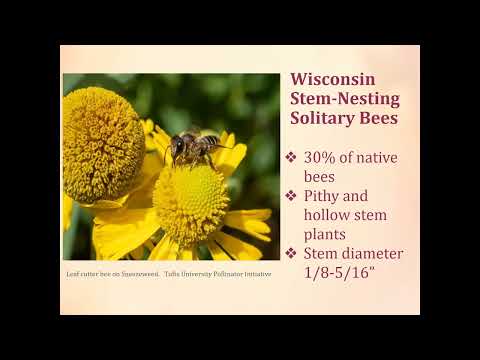
Cardine explained that conserving the species requires two parallel strategies: (1) ensuring continuous floral resources from early spring through autumn so queens and later‑season gynes can feed and store fat, and (2) preserving and creating nesting and hibernation habitat, including leaving leaf litter, stems and natural vegetation intact in some places. She said queens often use rodent burrows or sheltered above‑ground cavities and that late‑blooming flowers such as showy goldenrod and New England aster are especially important for gynes preparing for overwintering.
The presentation also covered threats that can undermine recovery, including habitat loss, pesticide exposure and disease transmission from managed colonies. Cardine encouraged people to participate in the Wisconsin Bumblebee Brigade by photographing bees and submitting sightings to help the DNR track populations and landowner practices.
Cardine and the hosts said they will circulate the slides, the recording and resources for people who want to adopt recommended actions or contribute data to community science monitoring programs. The webinar emphasized practical, nonregulatory measures residents and local land managers can take to help the rusty‑patched bumblebee and other at‑risk pollinators.