Get Full Government Meeting Transcripts, Videos, & Alerts Forever!
Get email alerts on the Trail Project topic
No spam. Unsubscribe anytime.
Advisory group hears plan to turn White Lake trail design into a 'shovel-ready' project
Summary
Advisory members and staff discussed a proposed multiuse path around White Lake, engineering work with three firms, DOT involvement, easement challenges near Clarkland Village, and potential state and federal grants with possible matching funds.
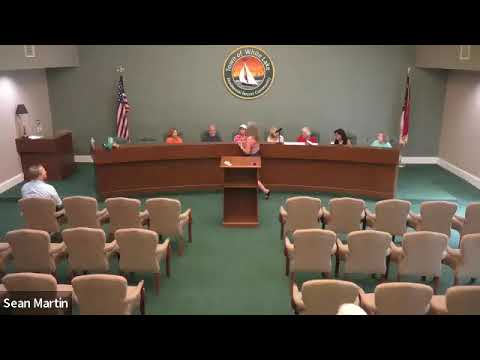
White Lake recreation advisory members and staff discussed steps this week to move a proposed multiuse path around White Lake from concept to construction-ready status.
Staff said three engineering firms are engaged to turn the preliminary trail plan into a project that can compete for grants and construction funding. "It's a preliminary design work starting in September, which is a long process," the staff member said, adding the next goal is to make the plan shovel-ready so grant applications can support construction.
Members said the design calls for a wider shared-use path where space allows and sidewalks where the roadway and right of way constrain the route. Candy Boyette, a resident who led the meeting, said the preferred alignment would use a wider path when possible but accept sidewalks on Lake Road if required by the Department of Transportation.
Easements and property constraints were flagged as major obstacles. Participants said several parcels around Sandy Cove and at the end of Clarkland Village have encroachments or private parking that will require easement work. "There's one house that went to Clarkland Village that the easement is their parking deck," one resident said, describing the need to clear right-of-way access for a continuous path.
The group discussed a previously proposed boardwalk over wetlands that would cost about $1,000,000; staff said work by DOT or other agencies on sections of the route could reduce the advisory board's responsibilities. The staff member described the right-of-way review as "tedious," noting it involves pulling old records and coordinating with property owners.
On funding, staff outlined a range of possible sources including state trail grants, USDA programs and other matching funds but emphasized availability depends on final state budget decisions. The advisory board was encouraged to help draft narratives for grant applications and to coordinate with county commissioners to pursue matching funds.
Next steps include finalizing edits to the advisory board's bylaws, preparing grant narrative materials ahead of a September planning deadline, and receiving an update at the next meeting with more specific cost estimates and a timetable for design and right-of-way work.