Get Full Government Meeting Transcripts, Videos, & Alerts Forever!
Get email alerts on the Humanitarian Aid topic
No spam. Unsubscribe anytime.
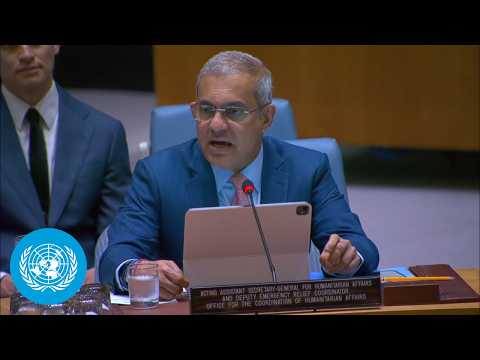
Agency official warns Security Council of mounting civilian toll in Ukraine, urges action
Summary
An agency official from the United Nations Office for the Coordination of Humanitarian Affairs told the Security Council that recent strikes across Ukraine have killed and injured hundreds of civilians, disrupted essential services and damaged humanitarian supplies, and urged members to press parties to protect civilians and keep aid flowing.
An agency official with the United Nations Office for the Coordination of Humanitarian Affairs told the United Nations Security Council on July 13 that the past week has seen “another surge of civilian casualties and suffering” in Ukraine and urged members to press all parties to protect civilians and enable unimpeded humanitarian relief.
The speaker said attacks across Ukraine have “killed and injured hundreds of civilians,” citing strikes in major urban centers including Dnipro, Kyiv, Kharkiv, Kherson, Sumy and Zaporizhzhia that have damaged homes, schools and public services and left many civilians cut off from electricity, water and sewage services. “For thousands of civilians, this harm is life changing and long lasting,” the agency official said.
The official warned that humanitarian access is narrowing as fighting intensifies, noting that in parts of Donetsk region access has been intermittently suspended, which complicates evacuations and prevents relief from reaching people who remain. They said the absence of a United Nations monitoring presence in some areas does not reduce the seriousness of reported civilian harm.
“The operating environment is becoming increasingly unpredictable and volatile,” the official said, describing evolving tactics that raise the risks to civilians and humanitarian workers. They recounted recent attacks on humanitarian assets: a humanitarian convoy struck by a drone in territory controlled by Dnipro — the third such incident in two months — and strikes that damaged a Ukrainian Red Cross warehouse and destroyed supplies intended for civilians.
The speaker reported that attacks harming humanitarian personnel and damaging assets have increased by more than 20 percent compared with the same period last year and said those attacks ‘‘deny civilians and humanitarian assistance that they need to survive.’’ They urged that humanitarian personnel and assets be protected and that relief be allowed rapid and unimpeded passage.
The official said the United Nations Office for the Coordination of Humanitarian Affairs remains ready to support practical arrangements for aid delivery and safe, voluntary evacuations wherever those are needed, but stressed that such work requires protection for aid workers, sustained and flexible funding, and practical arrangements to facilitate humanitarian action.
Concluding their remarks, the agency official told the Council, “All states must use their influence to ensure respect for international humanitarian law” and urged members to pursue “every practical opportunity to prevent further civilian suffering.” The statement closed with an appeal for immediate action to protect civilians and sustain humanitarian assistance.
The Security Council heard the statement as part of ongoing briefings on the humanitarian consequences of the conflict; no formal Council decision or vote was recorded in this transcript segment.