Get Full Government Meeting Transcripts, Videos, & Alerts Forever!
Get email alerts on the Budget topic
No spam. Unsubscribe anytime.
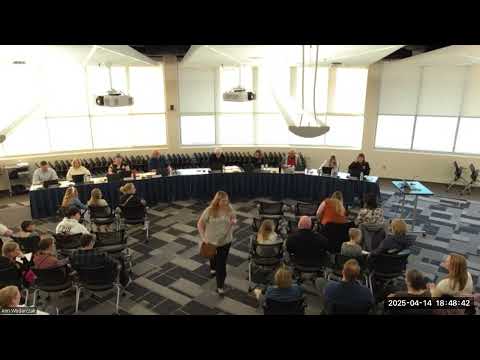
Hamilton board approves draft 2025-26 budget filing amid $312,000 gap to five-year target
Summary
Board approved the draft 2025-26 budget filing after a presentation outlining revenue assumptions (including a $325 per-pupil revenue-limit increase) and expenditure pressures (3% salary assumption and higher health-insurance costs), noting a $312,000 shortfall against the board's five-year target and potential savings to close the gap.
The Hamilton School Board voted to approve the district raft 2025-26 budget filing after administrators outlined revenue and expenditure assumptions and identified a remaining shortfall relative to the board's five-year target.
The budget presenter said the draft assumes a $325 per-pupil increase in the revenue limit (about $1.7 million) and other adjustments that together add roughly $2.8 million in additional revenue. The presentation also counted estimated expenditures: a 3% salary increase for staff, health-insurance cost increases (an estimated nearly $1.4 million driven by claims in the self-funded plan), and other operational increases that together raise projected expenditures by about $670,000.
"Based on what we know at this point, I made some assumptions for the 25-26 school year," the presenter said, describing how recent open-enrollment, transportation and benefits trends influenced the draft.
After accounting for projected revenues and the removal of about $2.16 million in capital projects that will not be completed this year, the draft shows approximately $84.1 million in revenue and just under $82 million in expenditures, leaving an estimated $2.1 million net position. That leaves the district about $312,000 short of the board's targeted overage that the board had set when planning the referendum and five-year projections.
Administrators identified potential actions to close the gap, including savings tied to the new student-transportation driver positions and reconfigurations in special education, possible health-insurance plan changes, additional open-enrollment seats, and delaying some capital expenditures. One cited example was a projected $72,000 savings related to using vans and district drivers rather than adding another bus service.
Board members asked for clearer multi-year roll-up and drill-down capability to see sources and uses of funds and how decisions in the current year would affect subsequent levy choices. The presenter said the draft will continue to be refined; certain figures will change with final state aid and property valuation numbers and when final capital spending is reconciled.
The board approved the draft filing to begin the formal process; administration said it will return with more detailed roll-up reports and spring updates as new state and federal information becomes available.