Get Full Government Meeting Transcripts, Videos, & Alerts Forever!
Get email alerts on the Public Works Culvert topic
No spam. Unsubscribe anytime.
Chincoteague council approves precast box culvert after public-works recommendation
Summary
The Chincoteague Town Council voted to approve a precast box culvert replacement at Eel Creek, choosing a $1.6 million, 90-day option that widens flow capacity and allows future bike/ped facilities; the Public Works Committee recommended the larger option over a $200,000 slip-liner alternative.
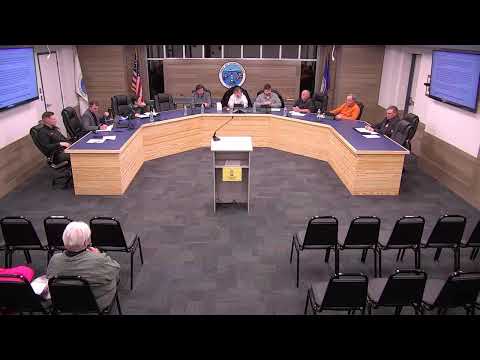
CHINCOTEAGUE, Va. — The Chincoteague Town Council voted Jan. 16 to proceed with a precast box culvert replacement at Eel Creek, approving the Public Works Committee’s recommendation to pursue a larger, longer-lasting structure instead of a less-invasive slip-lining repair.
Mike Talbert, who presented the public-works report, told the council the existing culvert is a 36-inch reinforced-concrete pipe that has settled and is siphoning roadbed material when it is full. He said the committee weighed two options: slip-lining the existing pipe — a roughly $200,000 job that could be completed in about 30 days and carries a 50-year liner warranty — or installing a precast box culvert that would increase flow capacity, widen the road edges for possible future sidewalks or bike lanes, and likely last longer. "The Public Works Committee, selected option number 2," Talbert said.
Talbert estimated the precast option at approximately $1.6 million and said it would take about 90 days to construct once on site; the work would require factory-made precast sections to be trucked in and staged, with temporary traffic controls and likely temporary lighting during the most disruptive phase. He noted engineering funds are included in the current fiscal year (FY25), so design could begin immediately if council approves.
The committee flagged grant funding as a likely pay source: Talbert told councilors that much of the work on either option could be covered by the town’s U1 grant, although the town would need to coordinate phasing with VDOT if the full $1.6 million cannot be provided in a single year.
Council members raised concerns about construction impacts and navigable clearance. One council member urged doing the work "right" to protect the road and beach access and to provide safer space for cyclists. After discussion, a motion was made and seconded to approve option 2; the council carried the motion by voice vote.
The council’s approval authorizes design and next steps to secure contracts and scheduling; Talbert said the town could begin engineering immediately and would return with construction details and phasing tied to grant and VDOT coordination.
What's next: Engineering is funded in FY25, Talbert said, and the town will proceed with design work; councilors will be asked to authorize construction contracts and any phased funding plan once bids and grant approvals are clearer.