Get Full Government Meeting Transcripts, Videos, & Alerts Forever!
Get email alerts on the Corrections Policy topic
No spam. Unsubscribe anytime.
Appeals court hears pro se inmate challenge to DOC mail policy and whether a prior judgment should be corrected
Summary
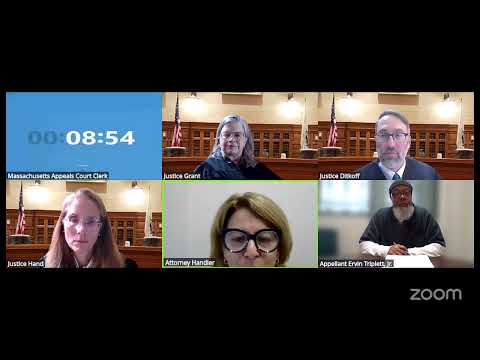
The Massachusetts Appeals Court heard arguments in Triplett v. Gray on July 13, 2026. Pro se plaintiff Mister Triplett said the Department of Correction enforced an unlawful SOP that supplanted 103 CMR 481 and destroyed or failed to deliver preserved mail; Department counsel urged mootness and said the injunctive relief already provided mooted further relief.
The Massachusetts Appeals Court heard oral arguments Monday in Triplett v. Gray, No. 251188, a pro se challenge to Massachusetts Department of Correction mail procedures and whether a superior-court judgment should be corrected.
Mister Triplett, the pro se appellant, told the three-judge panel the core issue is the Department’s use of an operating procedure that supplanted the regulation 103 CMR 481 and was not promulgated under the Administrative Procedures Act of 1946. "They no longer have it," Triplett said of missing mail, adding that defendants admitted mail from 2018 had been destroyed and that, from Jan. 1, 2019, through Nov. 25, 2022, preserved mail was not delivered as ordered. He said the failure deprived him and senders of notice and appellate rights under the CMR and raised constitutional concerns under the First, Eighth and Fourteenth Amendments. "I would ask that the court reverse and set aside the decision to vacate the Worcester Superior Court judgment in this matter," he said.
Heidi Handler, counsel for the defendants and representing the Massachusetts Department of Correction, told the court the record shows Triplett received partial summary judgment and injunctive relief where preserved mail was available. Handler argued further relief would be moot because the SOP is no longer in use and the department has provided what it located. "A declaration is merely an intellectual exercise," Handler said, adding that defendants are entitled to qualified immunity for damages claims and that remanding for a corrected entry would expend judicial and institutional resources without producing new relief.
The panel questioned whether correcting the superior-court judgment to reflect the earlier declaratory ruling would be an appropriate use of judicial resources if the underlying conduct is no longer ongoing. One justice asked whether a separate, final judgment had been entered on the declaratory relief; Triplett said he had filed for summary judgment and that a declaratory judgment had been granted. The justices probed whether correcting the record would prejudice the department so long as no new, forward-looking relief or damages briefing were opened.
Handler acknowledged the procedural oddity but told the court the declaratory relief would not lead to additional substantive remedies for Triplett and that any correction would require reopening the case in the trial court, convening parties and using prison resources for remote participation.
The argument concluded after allotted time; the panel closed the video portion and said it would rejoin in the courtroom shortly. The court did not announce a decision from the bench at the hearing.
Sources: oral argument transcript, Triplett v. Gray, No. 251188.