Get Full Government Meeting Transcripts, Videos, & Alerts Forever!
Get email alerts on the Ordinance 83 topic
No spam. Unsubscribe anytime.
Commissioners hold first reading on proposed county gross‑receipts tax to fund property‑tax relief
Summary
At a July 7 first reading, commissioners reviewed Ordinance 83, which would impose a 0.5% county gross‑receipts (and matching use) tax to fund a property tax reduction fund; county staff said collection would be handled by the South Dakota Department of Revenue and the measure would take effect Jan. 1, 2027 if adopted.
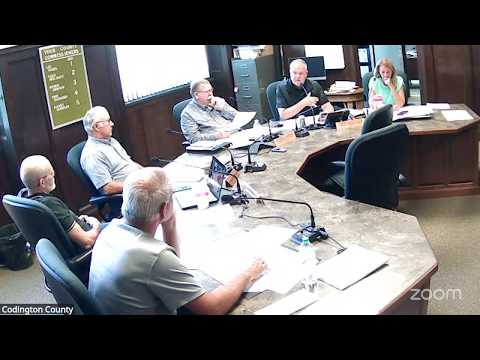
Commissioner Gable read the first reading of Ordinance 83 at the July 7 Codington County Commissioners meeting, explaining the measure would impose a 0.5% county gross‑receipts tax and a matching use tax to create a property tax reduction fund.
"There is hereby imposed .5% on the gross receipts of all persons engaged in business within the jurisdiction of Codington County," Commissioner Gable read, citing South Dakota codified laws 10‑52B, 10‑45 and 10‑46 as the legal authorities that would permit county collection and distribution for property tax relief.
The ordinance as presented would direct all monies collected into a property tax reduction fund administered under state law and collected by the South Dakota Department of Revenue under the same rules that govern state sales and use taxes, Gable said. He read a proposed effective date of Jan. 1, 2027 for collection if the county adopts the ordinance.
Gable and other commissioners framed the proposal as a way to offset part of the county property tax levy for owner‑occupied property. "For a $325,000 owner‑occupied property, the governor's office estimates savings of about $821 a year," Commissioner Gable said, presenting the Department of Revenue template and estimates shared with the board.
The meeting record shows no action was taken beyond the required first reading. Commissioners said the first reading is intended to familiarize the public and the board; a second reading and further deliberation will follow before any adoption. Staff said the county is publishing the ordinance text and soliciting public feedback in advance of a second reading.
Several commissioners asked staff to gather additional implementation details from the state about how the new tax would affect county levies and mill calculations; staff said those details remain under discussion and counties are implementing the option on a case‑by‑case basis.
Next steps: the board will accept public comment and consider a second reading before any vote on adoption. The first reading does not enact the ordinance.