Get Full Government Meeting Transcripts, Videos, & Alerts Forever!
Get email alerts on the Tree Ordinance topic
No spam. Unsubscribe anytime.
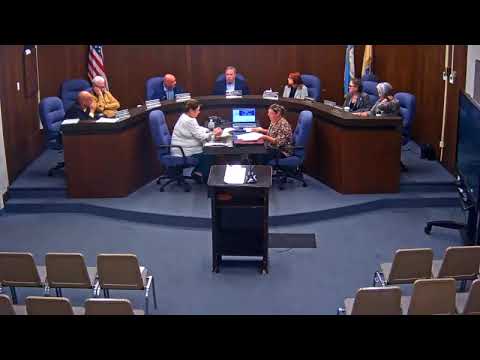
Hamilton council refers tree-removal code changes to planning board after resident questions about fees and exemptions
Summary
Council voted to send proposed changes requiring residents to report and obtain permits for certain tree removals to the Hamilton Township Planning Board for review; council members and residents questioned acreage-based thresholds and a $400 replacement fee for some trees.
The Hamilton Township Council voted to refer proposed changes to the township's land-use code that would require residents to notify the township and, in some cases, obtain a permit before removing trees on private property.
Council President (speaker 4) said the ordinance, which mirrors a Department of Environmental Protection model, would extend current commercial tree-replacement rules to some residential properties and create reporting and permitting requirements for tree removals between 4-inch and 10-inch caliper or for trees taller than 6 feet. Under the draft language discussed, property owners could either replant trees that meet the ordinance's size categories or pay a $400 fee where replacement is not feasible.
The change is being advanced as a resolution to send the proposed text to the Hamilton Township Planning Board for review under NJSA 40:55D-26; council adopted that referral by roll call. Council members repeatedly said the intent is to prevent large-scale clearcutting and to protect stormwater control and flood mitigation values provided by tree cover.
Residents at the meeting raised concerns about how the ordinance would apply to small lots and asked how the phrase "4 trees per acre" would translate for typical quarter-acre or smaller suburban lots. Speaker 1 (who identified herself in public comment as Julie Lane) and others asked whether the ordinance would impose fees on homeowners who remove sick or hazardous trees. Council members and staff repeatedly said the draft includes exemptions for hazard trees, dead or diseased specimens, and cases where safety is the reason for removal, and that those scenarios would not trigger replacement fees.
Council members asked the administration to clarify the lot-size math used in the ordinance and to return with language that makes the exemptions and fee triggers explicit before second reading and debate. The council president said the planning board review is the next step and that the ordinance will come back to the council for a second reading and full debate after the planning board report.
The referral vote was recorded on the transcript as a roll call tally by the clerk. The council also asked staff to prepare clearer guidance for residents and to provide examples showing how the rules would apply to typical lot sizes.
The planning board's review is procedural under state law; any substantive amendments recommended by the planning board will be considered at the council's subsequent second-reading session.