Get Full Government Meeting Transcripts, Videos, & Alerts Forever!
Get email alerts on the Agenda Redesign topic
No spam. Unsubscribe anytime.
Council of Great City Schools urges Providence board to refocus meetings on student outcomes
Summary
At an Oct. 9 workshop, consultants from the Council of Great City Schools recommended that the Providence School Board use a goals‑linked monitoring calendar, expand use of the consent agenda and limit public‑comment time to free up board time for student‑outcome monitoring.
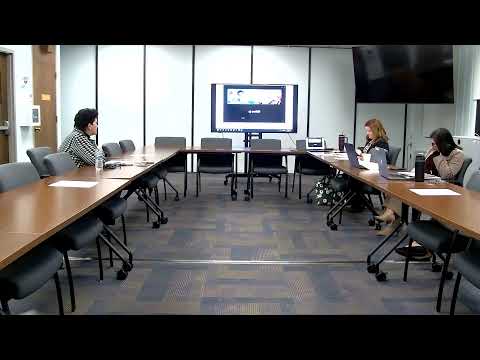
The Providence School Board met Oct. 9 for a workshop on redesigning its meeting agenda to prioritize student outcomes, with outside consultants from the Council of Great City Schools leading the review. Chair (speaker 2) opened the session and framed the work: "We are meeting this evening to talk about agenda redesign," she said.
Cindy Ellsburn of the Council of Great City Schools told board members the exercise is intended to make the board’s limited meeting time focus squarely on progress toward adopted goals. "The idea of agenda redesign is to look at your agenda through that lens of what are we doing, how are we spending our time, is it student outcomes focused," Ellsburn said, walking the board through an item‑by‑item evaluation: if an item is not focused on monitoring progress toward board goals, decide whether to keep it, delete it or modify it.
AJ Cragle, also with the council, repeatedly emphasized the tradeoffs of meeting time. "Every minute that we spend on thing X is a matter of not spending on thing Y," he said, urging the board to be intentional in what it schedules and to set a monitoring calendar so progress reports align with adopted goals.
Board members generally accepted the framework and flagged several specific recommendations. Members agreed to keep procedural items such as the call to order and roll call for compliance and to retain the pledge of allegiance after multiple members said the community expects it, even though it is not outcome‑focused. The board debated whether superintendent comments should be limited to material that reports progress on goals; some members said Superintendent updates have become more outcome‑oriented recently but suggested using written memos for non‑monitoring updates to save meeting time.
The consultants recommended expanding and defaulting to a robust consent agenda for operational and non‑monitoring items while preserving the board’s right to pull items for discussion. "Consent is a great way to handle those items — items can be on record for the public yet handled as one bundled item," Ellsburn said. Members agreed that items requiring deliberation or a committee recommendation should still be scheduled for discussion or a future vote rather than buried on consent.
A central point of debate was public comment: current bylaws, board members said, designate up to 30 minutes of public comment unless the board votes to allow more, and the district generally asks speakers to sign up by 4 p.m., though in‑person signups are often accepted. The board clerk (speaker 1) said timekeepers ask speakers to limit remarks to three minutes. Several members warned that lengthy public‑comment periods have pushed student‑outcomes presentations late into the evening and proposed options including shorter overall public‑comment time, voluntary categorization of comment topics at signup, a separate youth comment slot early in the meeting, or regional forums to route concerns to the appropriate office before the full board meeting.
The consultants also told the board to clarify committee roles and deliverables: committees that produce concrete recommendations or policy should appear on the board agenda for deliberation and vote, while routine updates could be delivered via consent or written reports. Board members discussed the district’s finance, policy, health & wellness and CTE committees and noted the intergovernmental nature of the building committee.
Facilitator (Chair) said she will prepare a short memo summarizing the workshop’s decisions and outstanding questions for inclusion on the consent agenda of the next meeting and that the group aims to provide recommendations by Oct. 15 so leadership can place items on the Oct. 22 agenda. The Council agreed to provide a spreadsheet showing how other districts handle public comment and other sample practices.
The meeting closed with routine motions to adjourn; the board voted to adjourn and ended the workshop at 6:34 p.m.
What’s next: the facilitator will file a memo to the board summarizing proposed changes and the council will send comparative materials on public‑comment practices; leadership will consider those recommendations ahead of the board’s Oct. 22 meeting.