Get Full Government Meeting Transcripts, Videos, & Alerts Forever!
Get email alerts on the Homeless Services Intake topic
No spam. Unsubscribe anytime.
Neighbors urge Community Board 2 to press city for details on new homeless intake center
Summary
Multiple residents told Manhattan Community Board 2 that converting Bellevue/East 3rd facilities to an intake center will overwhelm staff and spill residents into neighborhood streets; speakers asked for agency briefings and a community task force to monitor impacts.
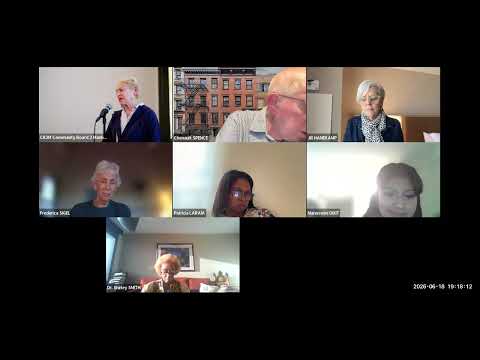
At Manhattan Community Board 2’s June meeting, residents voiced alarm about the city’s plan to make intake centers for homeless men at Bellevue and the East 3rd Street shelter, urging elected and city officials to provide fuller operational details and to meet with the board.
Carol Putre, a 40-year East Village resident and member of the 9th Precinct Community Council, said intake processing takes six to eight hours per person and presented a staffing scenario to argue the proposed operation would create daily overflow and increase street presence. She cited week-over-week crime figure comparisons between precincts to underline neighborhood safety concerns.
"Using the lower estimate of 60 men a day coming daily to the shelter and 6 hours intake for each, each case manager, if they worked a 12 hour day ... we'll be able to process 2 men a day," Putre said as she walked the board through arithmetic meant to show a daily backlog unless staffing is substantially larger than what residents expect.
Other public speakers described prior experience with intake operations and urged a formal channel for community oversight. Susan Bridal of NoHo asked the board to consider a subcommittee or an advisory mechanism and said residents want a phone number or regular briefings so issues can be raised before conditions deteriorate.
Council staff and a borough representative told the board they had urged the Department of Social Services to brief community boards before August; board officials said they had received a verbal agreement for such outreach and encouraged residents to monitor the CB2 calendar for a scheduled presentation.
Why it matters: Rapid changes to shelter intake operations can have immediate neighborhood effects on public safety, street conditions and local services. Residents asked the board to press DSS and other agencies for operational staffing levels, intake timelines, and a clear plan for on-site case processing to reduce street overflow.
What’s next: Elected-office staff said they had requested DSS briefings for community boards before August; the board and residents asked the agency to present details in a public meeting so the community can offer input and track outcomes.