Get Full Government Meeting Transcripts, Videos, & Alerts Forever!
Get email alerts on the Surveillance topic
No spam. Unsubscribe anytime.
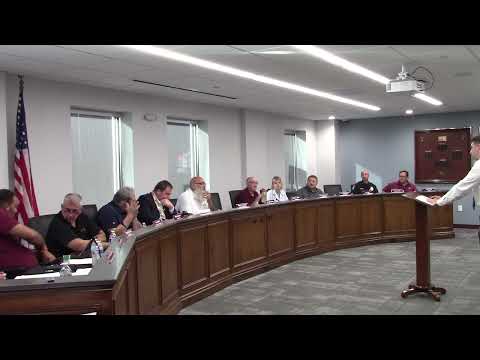
Resident raises privacy concerns about ALPR 'Flock' cameras; police say department controls access
Summary
At Monday’s Munhall Borough meeting, resident Dane Kinzel questioned who monitors the borough’s license-plate reader cameras and whether they use AI tracking. Police said the department can access footage for investigations, the devices run continuously, and access is limited; residents pressed for safeguards and transparency.
A resident urged the Munhall Borough Council on Monday to explain who monitors the borough’s automated license-plate reader (ALPR) cameras and whether the systems use AI that could profile residents.
Dane Kinzel, who identified himself from 122 Sigma Drive, asked whether the cameras on Main Street and near the cemetery were operated by the police department or an external vendor and whether the borough can access live feeds. "I just wanna know, who observes them? Is that directly from the department, or is that from a more federal source?" Kinzel asked.
The council and police representatives said the borough’s police can access recordings for investigations and that the systems are used for crime review. A police official said the cameras run 24/7 and that footage is typically reviewed when there is a need tied to an investigation. "We can access them for investigation," the police official said when asked whether staff can pull up images on computers in borough offices.
Speakers at the meeting acknowledged the tension between public-safety benefits and privacy concerns. One resident recounted an incident where cameras helped identify a suspect who followed and assaulted someone; that, proponents said, demonstrated the cameras’ investigative value. Others warned about potential misuse if analytics or AI were layered onto the system, raising the prospect of continuous tracking of license plates or automated scoring.
Police and council members stressed legal constraints and internal controls. Officials said officers review public-space footage under plain-view principles and described administrative oversight such as login tracking and audit trails as safeguards against improper use. Council members also said the district attorney had expressed a preference for certain camera vendors and that the borough was evaluating alternatives.
The exchange did not produce new policy or a vote. Council members agreed to continue monitoring the matter and to await results of vendor reviews and district attorney guidance before making procurement or operational changes.
The public comment that raised the issue occurred early in the meeting; residents also asked for clarity about how often footage is reviewed and what internal auditing is performed. The borough did not announce an immediate change to camera operations during the meeting.