Get Full Government Meeting Transcripts, Videos, & Alerts Forever!
Get email alerts on the Airport Operations topic
No spam. Unsubscribe anytime.
Vinton City work session presses for tree removal after DOT warns runway could close
Summary
Council members and the airport commission agreed to contact an engineering firm and the Hanson family after state DOT warnings that obstructions could lead to a runway closure; the group weighed a costly GIS survey versus grant-funded tree removal and discussed creating an airport authority to spread costs.
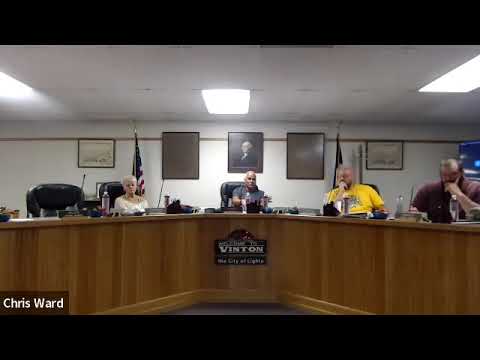
At a Vinton City Council work session, council members and the airport commission pressed for immediate steps to address trees that federal and state aviation officials say obstruct a runway and could prompt the state Department of Transportation to close the north–south runway before the end of the year. Airport commission member (S3) said: "the state DOT says they are gonna come in and close the runway on us before the end of the year."
The commission and council reviewed options and costs. City staff (S2) relayed an estimate from Carl Myers that a full GIS survey would cost "450,000 to $600,000," and attendees said the commission’s engineer advised against a large GIS survey because it would be expensive and primarily yield only a shorter runway. "It's much cheaper to have the trees removed," the airport commission member (S3) said.
Members discussed two practical alternatives: removing the obstructing trees, funded in part through a grant that "is still available through next calendar year," or displacing the landing threshold (a paint-and-marking change) that would effectively shorten the runway but would trigger a full survey and additional costs. Participants repeatedly flagged the high out‑of‑pocket cost of a full survey and long-term affordability concerns for the city. One speaker noted a separate estimate for a new runway project on the order of "$500,000," saying the city cannot currently absorb such a cost.
The meeting highlighted communication failures with affected landowners. Several participants said Tom Hanson and other members of the Hanson family had not been consistently contacted about easement corrections and options. A caller identified as Resident (S9) said the Hansons had been led to believe other avenues existed to avoid cutting trees and urged clear communication: "they've been made to believe that there is other options."
Legal constraints and zoning also factored into the discussion. Participants warned against unilateral volunteer tree removal because of easement irregularities and potential county zoning conflicts; the group said the city attorney had advised caution. The commission noted that, technically, some obstructions place properties in violation of the county airport zoning ordinance, but speakers said enforcement or a successful legal remedy was uncertain.
As an immediate next step, the group agreed to document outreach and move to gather accurate control points for the site. Chair (S5), the council chair, said Schneider (the city’s engineering contact) would be asked to establish survey control points and research recorded easements; City staff (S2) volunteered, "I can contact [Schneider] directly." Participants also agreed to contact the Hanson family by phone and to start a public email chain documenting outreach and actions so there is a clear record.
No formal motions or votes were taken at the session; participants described the steps above as agreed‑upon next actions to pursue before the council’s next meeting. The council and commission planned to reconvene in a couple of weeks or before the next regular meeting to review Schneider’s findings and any response from the Hanson family.