Get Full Government Meeting Transcripts, Videos, & Alerts Forever!
Get email alerts on the Sustainable Development Goals topic
No spam. Unsubscribe anytime.
UN forum speaker warns SDGs slipping, urges $3 billion AI fund and urgent financing for water and renewables
Summary
At a United Nations review session, a presenter warned recent conflicts, climate extremes and financial strain are undermining progress on the 2030 Agenda and called for urgent action on financing, water and clean energy, including a proposed $3 billion global fund for equitable AI benefits and an AI environmental transparency initiative.
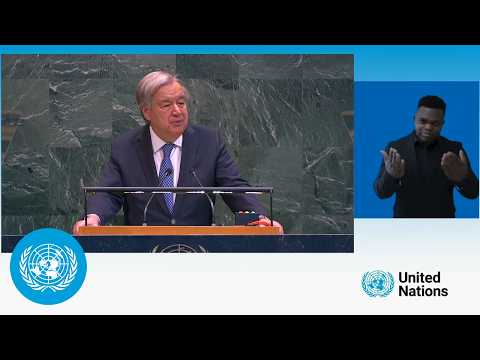
A presenter at a United Nations review forum warned that recent crises are putting the Sustainable Development Goals increasingly out of reach and called for urgent global action on financing, water, clean energy and artificial intelligence governance.
The presenter said the voluntary national review process shows where "political will exists, solutions are found," and cited 401 country reviews presented so far. But they warned that only 36% of 139 assessable SDG targets are on track or making moderate progress and that 15 targets have gone into reverse.
Highlighting human needs, the presenter listed recent gains — including lower child and maternal mortality and broader access to social protection, electricity and the Internet — but said those advances are threatened by "multiplying" conflicts, growing inequalities and climate extremes. The speaker noted the world has just endured "11 hottest years on record" and warned of a possible temporary overshoot of the 1.5°C limit.
On water and sanitation, the speaker said a global synthesis report shows progress but stressed continuing shortfalls: "About 2,200,000,000 people still lack safely managed drinking water, and 3,500,000,000 lack safely managed sanitation." They described the UN Water Conference as a critical opportunity to drive collective action.
Turning to energy, the presenter said renewables are now "the cheapest, fastest, and most scalable source" of new electricity and that wind and solar for the first time exceeded all new electricity demand growth last year. At the same time, they said four of every five dollars invested in clean energy went to advanced economies and China, while Africa received just 2% of global clean energy investments despite large solar potential.
The speaker urged lowering the cost of capital to direct investment where it is most needed and called for responsible management of critical minerals and support for communities dependent on fossil fuels during the transition to renewable energy.
On technology, the presenter proposed a $3,000,000,000 global fund to help ensure artificial intelligence benefits all countries, particularly developing ones, and said major AI companies should disclose the environmental impacts of their systems. The speaker also urged commitments to power data centers with renewable energy by 2030.
Addressing finance, a subsequent presenter said the SDG financing gap now exceeds $4,000,000,000,000 annually, noting many developing countries pay more in debt service than they invest in their people. They urged multilateral development banks to scale up lending, for shareholders to provide fresh capital, and for expanded concessional finance, blended instruments, and new debt-management tools.
The presenters argued that reforming global financial architecture and increasing the voice of developing countries are essential steps ahead of next year’s SDG summit. The session closed with an appeal to keep the 2030 Agenda vision alive and to "make these final years count."