Get Full Government Meeting Transcripts, Videos, & Alerts Forever!
Get email alerts on the Shoreline Resiliency topic
No spam. Unsubscribe anytime.
State awards Colonial Beach $800,000 for North Beach shoreline resiliency planning
Summary
The Northern Neck Planning District Commission said Virginia’s Department of Conservation and Recreation awarded Colonial Beach a reimbursable $800,000 planning grant to fund engineering, permitting and environmental review for a North Beach shoreline resiliency project; DCR waived the local match for this award.
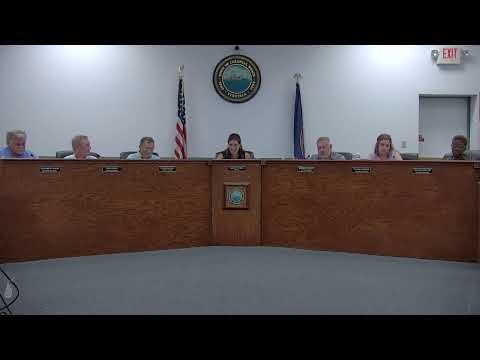
Jerry Davis, executive director of the Northern Neck Planning District Commission, told the Colonial Beach Town Council on Aug. 20 that the town received an $800,000 planning grant from the Virginia Department of Conservation and Recreation to advance a North Beach shoreline resiliency project.
Davis said the award covers the engineering, permitting and environmental review needed to make the project “shovel ready,” not construction. The work described in the grant application covers roughly 280 linear feet of shoreline, placing about 740 cubic yards of sand, creating approximately 13,000 square feet of new wetland habitat, installing about 180 linear feet of breakwater and modifying storm-drain pipes that contribute to local flooding and erosion.
Davis said DCR normally requires a 20 percent local match but approved a waiver for Colonial Beach because the project total is under $1 million, meaning the town receives 100 percent of the planning funds. The program is reimbursable: the town must contract, incur costs for consultants and then request reimbursement once work is invoiced under the DCR contract.
Council members asked whether the grant could be used for immediate infrastructure repairs; Davis replied it cannot be used for construction or maintenance and is limited to final engineering, permitting and environmental review necessary to apply for implementation funding later. He estimated the procurement, engineering and permitting phase would take about 12–18 months if the town and design consultant move promptly.
Davis offered the planning district’s help drafting a compliant RFP for engineering services and said the planning district will provide pro bono grant-administration assistance if the town chooses. Next steps are executing the DCR contract, procuring a qualified engineering firm under state procurement rules and setting a stakeholder meeting for residents in the project area.
If the town proceeds, the planning work will update construction cost estimates that can be used to apply for future implementation funding rounds.
The presentation and council questions left timing and construction funding as open items; Davis said the town could expect outreach from DCR to finalize contracts with awardees and that future rounds of implementation funding would be the next opportunity for construction money.