Get Full Government Meeting Transcripts, Videos, & Alerts Forever!
Get email alerts on the Environment Superfund topic
No spam. Unsubscribe anytime.
Cedarburg council agrees to pursue DNR deal so EPA funding can unblock larger AmCast cleanup
Summary
The Cedarburg Common Council voted to pursue an agreement with the Wisconsin DNR that would allow the DNR to sign with the EPA and secure an expanded federal cleanup for the AmCast Superfund site; recent EPA estimates rose from about $40 million to roughly $71–72 million, putting the city’s potential 10% share near $3.1–3.2 million.
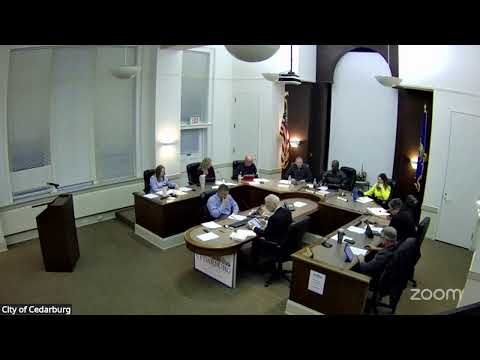
The Cedarburg Common Council on Wednesday directed the mayor and city staff to negotiate an agreement with the Wisconsin Department of Natural Resources that would let the DNR enter into a contract with the U.S. Environmental Protection Agency to secure expanded federal cleanup funding for the AmCast Superfund site.
City staff said earlier planning estimates for the cleanup were about $40 million but the EPA’s more detailed, recent assessment and Army Corps sampling raised the agency’s estimate to roughly $71 million to $72 million. That increase would raise the city’s 10% share under the state/DNR portion to roughly $3.1–$3.2 million, staff said.
“It’s an opportunity to leverage $27,000,000,” Christine Seager, director of the DNR’s Remediation and Redevelopment Program, told the council, adding that the state is statutorily required under the federal Superfund framework to cover a 10% match. “We could have an agreement with the city that has a not‑to‑exceed number and then the DNR could negotiate a not‑to‑exceed with EPA,” Seager said.
Why it matters: council members said the city risks either losing a substantial infusion of federal money or taking on an open‑ended obligation for a multi‑decade project. Several members urged limiting the city’s exposure by including a clear cap in any agreement. One council member moved that staff continue to pursue an agreement with the DNR and include a “not to exceed” amount—identified in the discussion as $3.2 million based on the EPA’s latest estimate—and the motion passed unanimously.
What the DNR said: Seager explained the higher estimate reflects more sampling and the Army Corps of Engineers’ involvement in cost modeling; she said the EPA’s $71–72 million figure includes a contingency the Corps requires and that final costs will depend on bidding and contract scope. She also said there are ways to manage exposure, including drafting a DNR–city agreement with a not‑to‑exceed clause and building options for in‑kind credits.
Council concerns and next steps: several members pressed for clearer reporting and financial transparency from the EPA and the DNR, including how contingency funds would be used. Staff said the city would not pay until the project invoices are issued at completion and that the city could work with its legislators and look for state budget inclusion or other financing options before funds are due. The council directed the mayor and staff to continue negotiations and return with a formal agreement for a June meeting.
Votes at the meeting: a motion to continue negotiating an agreement with the DNR (including a recommended not‑to‑exceed city share of $3.2 million based on current EPA estimates) was moved, seconded and approved by voice vote with no recorded nays. The council also discussed potential payment timing (staff said payment would occur at project close and estimated completion in 2033) and possible financing or grant strategies to reduce the city’s net outlay.
Budget context and caveats: staff said the $3.2 million figure is an estimate tied to the EPA’s current scope; if the total cost changes the city’s share would change unless a cap is negotiated. The DNR said the state’s $4 million is already in the budget as a special appropriation and that final costs and schedules will firm up after bidding and Army Corps cost work.