Get Full Government Meeting Transcripts, Videos, & Alerts Forever!
Get email alerts on the Technology And Infrastructure Innovation topic
No spam. Unsubscribe anytime.
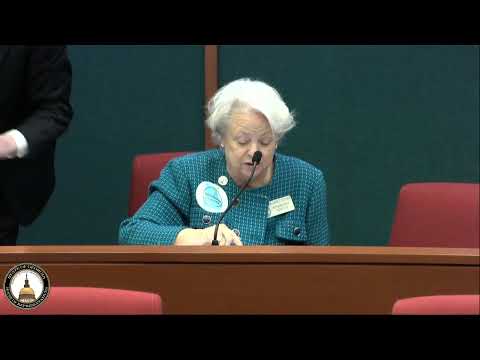
House subcommittee debates opt-in ‘AI seal of compliance’ for campaign ads and a new deepfake offense
Summary
A judiciary subcommittee reviewed LC 560095S, which would allow campaigns to opt into an "artificial intelligence seal of compliance" if they disclose AI use and sign an affidavit; the bill also creates a potential criminal offense for distributing deepfakes within 90 days of an election, prompting questions about enforcement and legal scope.
A House judiciary subcommittee examined a bill, LC 560095S, that would create an optional "artificial intelligence seal of compliance" for campaign advertisements and make certain deepfake election interference a criminal offense.
Representative Thomas, the bill sponsor, told the panel the seal would be administered by the Campaign Transparency and Finance Commission and could be affixed to advertisements only when the sponsoring candidate or committee discloses who paid for the ad, acknowledges that generative AI was used in creating part or all of the content, and states that depicted people or events "may be impersonations and events depicted may not have actually occurred." Thomas said the user must sign an affidavit and that using the seal without the affidavit would be a criminal offense; the commission could investigate misuse.
Why it matters: supporters said the measure aims to give voters clearer information about AI-generated content and to provide a mechanism for faster response when deepfakes circulate near elections. Thomas described examples he said motivated the effort, including a reported automated phone call that used a candidate’s replicated voice to suppress turnout.
Committee debate focused on three practical questions: who has prosecutorial jurisdiction, how to define publication and the 90‑day window, and whether state agencies have the resources and technical expertise to investigate deepfakes.
Representative Oliver questioned language that appears to grant the attorney general exclusive jurisdiction to initiate prosecutions; Thomas said the intent was to route election-related felony referrals to the attorney general’s office to reduce partisan weaponization, and that the current referral process sometimes sends matters to either a district attorney or the attorney general. Oliver pressed whether the bill, as written, would effectively preclude a district attorney from prosecuting certain election crimes.
Several members raised concerns about creating a new felony tied to deepfakes. Representative Holcomb said he supported the disclosure and seal elements but worried the criminal provision—making it unlawful to "create, publish, broadcast, stream, or upload" a deepfake within 90 days of an election "with the intent to deceive"—could be "overbroad or vague" and difficult for courts to apply. Holcomb asked whether content posted earlier and later reshared would be captured; Thomas said the bill targets the original uploader and that the 90‑day window is intended to narrow the law’s reach and strengthen its chances of surviving judicial review.
Members also discussed technical and jurisdictional limits. Representative Evans urged the committee to bring in the Attorney General’s office, the Campaign Transparency and Finance Commission and the GBI cybercrime group to assess whether those agencies have the resources and investigative tools to implement and enforce the proposal. Thomas acknowledged agency burden could grow and said he has spoken with the commission and the AG’s office but would not speak for them.
Penalty and enforcement: members asked why the draft sets a $50,000 penalty for serious violations; Thomas said the amount was chosen to be a meaningful financial deterrent roughly comparable to the cost of running a House campaign. The bill also creates a transparency path—an opt-in seal—for campaigns that want to certify responsible use of generative AI.
No vote was recorded during the hearing. The chair proposed continuing work in a smaller group with agency witnesses and the subcommittee adjourned after agreeing to pursue further technical and legal input.
Representative quotes from the hearing include Representative Thomas saying the proposal "creates this totally new idea which is the artificial seal of compliance" and that "it gives campaign transparency and finance commission the ability to come say, this is not a legit organization" when the seal is misused. Thomas also described a recent example: "there was a phone call that came out with Joe Biden's voice telling people not to vote." Representative Holcomb cautioned that "the application of this by the courts would be extraordinarily difficult because it's very either overbroad or vague." Representative Oliver flagged jurisdictional concerns: "Line 56 grants exclusive jurisdiction to the attorney general to conduct a criminal prosecution."
What’s next: committee members asked staff to coordinate agency witnesses and suggested a small working group to refine language before further consideration.