Get Full Government Meeting Transcripts, Videos, & Alerts Forever!
Get email alerts on the Trade And Customs topic
No spam. Unsubscribe anytime.
Ranking member urges funding for Assakuta customs automation; lawmakers weigh fiscal and oversight checks
Summary
After years of study and legislation authorizing automation, the committee debated appropriating local funds for the Assakuta customs system; supporters said automation will reduce revenue leakage and improve enforcement, while OFB noted some previously appropriated automation funds were folded into operations and said net changes are limited by retirement adjustments.
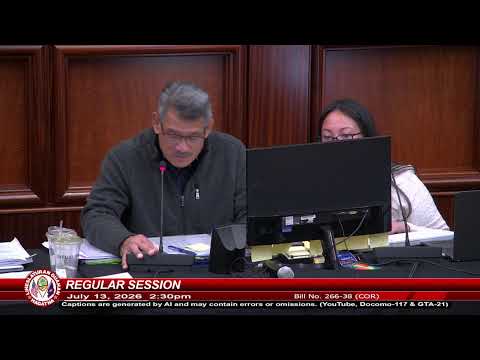
Customs and Quarantine received sustained attention as senators discussed whether to fund full implementation of the Assakuta automated customs management system. Ranking member Tina Munoz Barnes and other supporters framed funding as necessary to implement prior public laws (including public law 38‑109) that authorized automation, harmonized commodity coding, and advanced manifesting.
Barnes said a law without funding is "simply another promise that the government made and failed to keep" and urged the committee to provide local commitment to implementation while holding the administration and procurement to strict accountability measures; she cited audit estimates of substantial revenue leakage that the system could help recapture.
OFB said the substitute bill net increases CQA's appropriation compared with the EBR by roughly $496,005 after adjustments (including retirement-rate changes), and that previously appropriated phase‑3 funds were included in the department's operations rather than as a separate line item. Customs leadership reported reserve balances and requested release of roughly $2 million to cover ongoing personnel, operations and procurement needs; Customs provided a June update showing personnel and operations forecasts to the chair.
Senators asked detailed questions about prior appropriations (phase‑3 automation funding, K‑9 funds) and whether the department had expended previously appropriated sums; OFB said the FY25 lapses make it hard to confirm full expenditure without further accounting and that some funds were used but the committee should follow up to verify implementation status.
Next steps: OFB and Customs to provide follow‑up accounting on previous automation appropriations, a detailed implementation plan and procurement restrictions tied to the public law provisions authorizing Assakuta.