Get Full Government Meeting Transcripts, Videos, & Alerts Forever!
Get email alerts on the School Levy topic
No spam. Unsubscribe anytime.
Kasson-Mantorville board votes to set $500-per-student levy after debate over cuts and outreach
Summary
The Kasson-Mantorville School District board voted to set a $500-per-student levy after members debated a consultant-recommended $400 option, homeowner impacts, projected revenue and potential program cuts; the chair declared the motion carried following a voice vote.
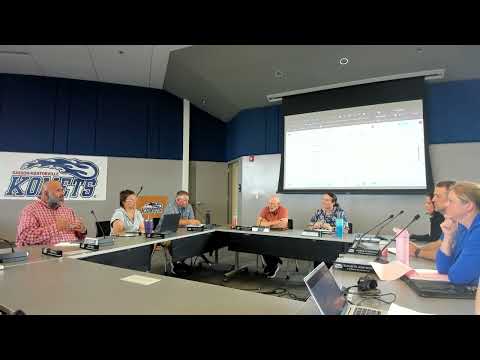
The Kasson-Mantorville School District Board voted at a regular meeting to set a $500-per-student levy after an extended discussion of revenue scenarios, potential program cuts and community outreach.
Board members spent the bulk of the meeting weighing two consultant-drafted options. A committee member summarized the projected household impacts presented by the consultant: "The $400 option was $35.83 a month. The $500 option was $44.83," and later reported the revenue estimates the consultant provided: about $858,000 annually for the $400 option and about $1.072 million annually for the $500 option (figures as presented to the board).
Members stressed that household impact varies with home valuation: one member noted the district median home value is closer to $450,000, which lowers the monthly household effect compared with examples based on a $700,000 home. The presenter and board members also flagged that the levy projections are sensitive to valuation assumptions and that declining enrollment across Minnesota has reduced state and per-pupil revenues.
On the question of program reductions, the presenter said the district would prioritize cuts that least affect students, naming low-attendance extracurriculars, shared administrative functions and some transportation choices as examples of where reductions might be considered. "You always look at things that least impact kids," the presenter said, urging caution about cutting core classroom staff.
Several board members argued for the higher levy to avoid returning to voters in a few years. "I don't want to come back to our same community ... and say we need another bond," one member said in making the case for $500, arguing the larger levy creates a buffer against future uncertainty. Others urged prudence and emphasized the consultant's guidance that the $400 figure had a stronger chance of passage, noting the survey margin of error the presenter cited was about 4 percent.
After discussion, a board member moved to set the levy at $500 per student; another member seconded. The chair called for a voice vote. Multiple members responded "aye," and the chair declared the motion carried.
Board members asked staff and the presenter to prepare outreach and contingency materials, including breakdowns of household impacts at different property valuations and a plan for community education should the board decide to proceed to ballot. The meeting agenda also listed forthcoming meetings on July 20 (regular) and Aug. 3 (special).
The board did not record a full roll-call vote in the transcript; the motion was adopted by voice vote and declared carried by the chair.