Get Full Government Meeting Transcripts, Videos, & Alerts Forever!
Get email alerts on the Transit topic
No spam. Unsubscribe anytime.
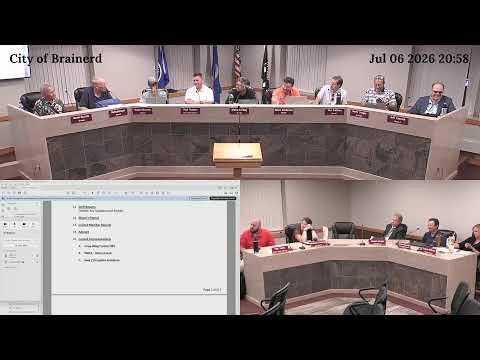
Brainerd council hears transit fare data, debates aligning fares with Baxter and next steps
Summary
Staff presented multi-year fare, ridership and cost reconciliation showing Baxter currently sets its own fares under a joint agreement; council members urged exploring options to align fares to boost ridership and asked staff to route the issue through the Transportation Advisory Committee for analysis.
City staff briefed the Brainerd City Council on July 6 about transit fares, ridership patterns and the intergovernmental agreement with the City of Baxter that currently allows Baxter to set fares within its jurisdiction.
Nick Broyles presented a multi-tab report covering fare revenues, allocated costs for Brainerd, Baxter and Crow Wing County, a reconciliation of revenues and outlays for 2023–2025, fare types (advance reservations versus same‑day), trip origin/destination patterns and a note that MnDOT is the grant recipient for the service with Brainerd as the local grant manager. Broyles said the joint agreement giving Baxter fare‑setting authority was adopted in summer 2025 and expires June 30, 2027; either party must give 180 days' notice to withdraw under the severability clause.
Councilmember Chesak argued the current fare disparity discourages riders and proposed removing the shared‑services arrangement so Brainerd could operate pickups without Baxter collecting fares; he said lowering fares could increase ridership and system efficiency. "Lowering the fares would be a better for ridership," he said, noting a November ridership dip among subscription riders that later recovered, which he interpreted as evidence of latent demand.
Other council members recommended routing the issue to the Transportation Advisory Committee for specific recommendations and asked staff to pursue discussions with Baxter; the council approved a motion directing staff to bring back options to the council (and to involve the advisory committee) at a future meeting.
What’s next: staff will follow council direction to consult TAC and attempt to engage Baxter (staff reported past attempts to present to Baxter's council had not yet been scheduled), and to supply the council with policy options on fare alignment and potential financial impacts if Brainerd adjusts fare levels.