Get Full Government Meeting Transcripts, Videos, & Alerts Forever!
Get email alerts on the Utility Rates topic
No spam. Unsubscribe anytime.
Pineville council weighs 2% utility increase as staff warns of aging pipes and grant conditions
Summary
City staff told the Pineville City Council on March 10 that long-delayed maintenance, grant conditions and rising costs are driving a proposed 2% increase to water, sewer and sanitation rates; residents urged caution over affordability on fixed incomes.
Pineville officials on March 10 discussed a proposed 2% adjustment to the city’s 2026 water, sewer and sanitation rates after city technical staff detailed rising costs tied to aging infrastructure and new grant requirements.
Tom (technical advisor) told the City Council that the city’s water and sewer infrastructure is aging and costly to repair, noting several lines are decades beyond their typical useful life. He said state grant programs now require a rate study and a 15% “sustainability” margin as a condition of awards. “When we applied and got a $5,000,000 grant from the state to do Cedar Lake pump station, embedded in that grant application was a requirement … that you make sure you have an audit and you pass a state audit, plus you make 15%,” he said.
The mayor recommended the council adopt a 2% consumer-price-index adjustment instead of allowing the automatic CPI‑U increase that some years would have been higher. Utility staff provided an example of the impact: the typical 3,000‑gallon bill would rise from $21.94 to $22.38 (about $0.48), and combined water and sewer charges would increase about $0.94 per month.
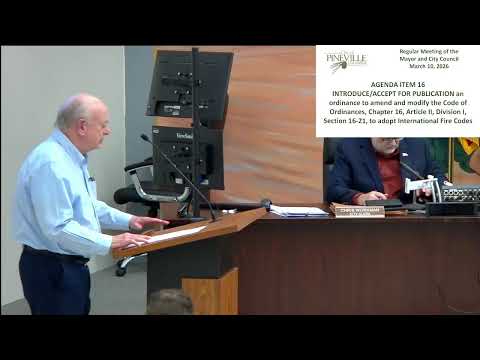
Resident Elizabeth Stelke, of 1607 College Drive, said she feared the decision could be left to a single official and that a fixed‑income household could be harmed. “I live on a fixed income… I would like to be able to stay here. But it is gonna depend on how much I have left in the bank account at the end of the month, and water and sewer is part of that,” she said. Council members and staff responded that the ordinance language now requires council approval rather than an automatic adjustment.
Resident Hugh Hall (1610 College Drive) urged colleagues to consider the actual costs of repairs and parts, citing steep price increases for parts and contractor work. “For a simple water leak on a 6 or 8 inch line, you’re gonna burn up a $1,000 bill,” Hall said, explaining why modest rate increases can be necessary to avoid catastrophic infrastructure failures.
Council members pressed staff on the rationale and mechanics of the change, including how prior practice had automatically applied CPI adjustments and how recent changes require council vote. Staff emphasized the difference between general CPI increases and the water‑and‑sewer index, which typically grows faster because of capital and underground utility costs.
At the meeting the mayor moved to adopt the 2% adjustment. The transcript records the motion and discussion, public comment, and staff examples, but a roll‑call vote on the rate resolution is not recorded in the available transcript excerpts.
What’s next: the council’s recommendation and the final vote (if not taken March 10) will determine implementation; staff emphasized the city must balance affordability concerns with meeting grant conditions and maintaining long‑term system sustainability.