Get Full Government Meeting Transcripts, Videos, & Alerts Forever!
Get email alerts on the Neighborhood Safety topic
No spam. Unsubscribe anytime.
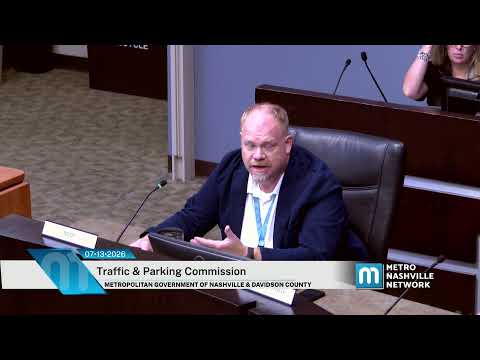
Commission approves 20 mph limits for Woodmont-area streets after residents recount near-misses
Summary
After extended public comment from Woodmont Lane residents about near-misses, mailbox strikes and children’s safety, the Traffic and Parking Commission approved lowering neighborhood speed limits to 20 mph and authorized a multiway stop at Woodmont Lane and Tulane Court; another proposed stop was deferred pending a visibility map.
The Metro Nashville Traffic and Parking Commission voted to lower posted speeds to 20 miles per hour on several interior streets in the Woodmont Lane neighborhood and approved an all-way stop at the intersection of Woodmont Lane and Tulane Court after residents described repeated near-misses and property damage.
Residents filled the commission chamber to press for safety changes. “My daughter was at a blind curve and a car came flying up the hill — it was probably going 40 miles an hour,” said Molly Blanton, who told commissioners her 6-year-old stopped going outside after the incident. Lexi Holcomb, speaking for the Woodmont Estates neighborhood, said her group submitted a petition with more than 120 signatures and neighborhood maps and asked the commission to approve the items on the agenda while pursuing further engineering work.
NDOT staff presented preliminary speed analyses and a MUTCD-based warrant review. “Using the speed-setting tool and treating the neighborhood as a system, I’m recommending a 20 mile-an-hour speed limit for all four of these streets,” said Smith of NDOT, who explained the recommended limits were based on 50th-percentile speeds, crash history and pedestrian activity. For Woodmont Lane specifically, the tool recommended 25 mph based on observed 50th-percentile speeds; NDOT elected to recommend 20 mph across the small network for consistency.
Commissioners debated enforcement and follow-up monitoring. One commissioner urged staff to gather new speed data after the school year starts to evaluate whether driver behavior changes and whether additional measures are warranted. Captain (traffic division) said the police department will prioritize enforcement requests and will return to the area with motorcycle enforcement when requested.
On multiway stops, NDOT said two of three examined intersections met sight-distance warrants; the Woodmont/Tulane intersection satisfied warrant B for insufficient stopping sight distance and the commission approved all-way stop control there. NDOT recommended denying a similar multiway stop at Woodmont and Dartmouth because the available sight distance exceeded the MUTCD threshold and could be corrected by trimming vegetation; the commission voted to defer that item for one meeting so staff can provide a before/after map and photos of vegetation maintenance.
The commission’s action was procedural; staff said further traffic-calming treatments (cushions, bulb-outs or other hardening) and a neighborhood traffic-calming selection remain possible through other programs. Commissioners asked NDOT to return with a map showing existing and proposed controls, signage options and updated data so the body can evaluate the neighborhood holistically.
Next steps: NDOT will install new speed-limit signs within weeks and follow up with fresh speed counts after the school year begins; the deferred multiway-stop item will return with a visibility map for commissioners to review.