Get Full Government Meeting Transcripts, Videos, & Alerts Forever!
Get email alerts on the Executive Session topic
No spam. Unsubscribe anytime.
Chair moves to enter closed session citing statute to consult with attorney
Summary
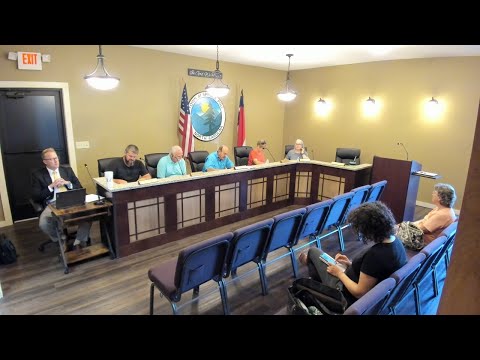
The meeting Chair moved to hold a closed session, citing a statute transcribed as “MC GS 14331811A3,” to consult with counsel and preserve attorney-client privilege; the transcript records a motion but does not identify a mover, a second, or the final vote.
The Chair moved that the meeting go into closed session, citing a statute recorded in the transcript as "MC GS 14331811A3," saying the purpose was "to consult with the attorney employed to retain and retain the public body in order to preserve to turn client privilege." The motion was made aloud but the transcript does not record who moved or seconded it, nor does it record a final vote or an announced outcome.
The motion followed the meeting’s opening ceremonial remarks, which included an invocation delivered by a presenter (S2) and brief acknowledgements. The Chair read the statutory language on the record and asked, "Do I have a motion to go to closed session?" Multiple short verbal confirmations — "Motion," "Okay," and a brief exchange that included the phrase "Rocky said check" — appear in the transcript but do not clearly identify a mover, a seconder or a recorded tally.
The statute citation appears in the transcript exactly as "MC GS 14331811A3." That citation string is unclear as presented in the audio transcript; the meeting record should be checked (audio or formal minutes) to confirm the precise statutory reference if required for legal or public records purposes. The transcript does not specify any follow-up steps, timing, or when the body planned to reconvene in open session.
No other formal motions, ordinances, or votes are recorded in the provided transcript excerpt. The meeting’s procedural business before the motion (references to meeting packets and prior minutes) and the ceremonial invocation are recorded but contain no substantive policy actions.