Get Full Government Meeting Transcripts, Videos, & Alerts Forever!
Get email alerts on the Budget topic
No spam. Unsubscribe anytime.
Martin County tentatively sets FY2027 budgets as officials warn November property‑tax amendment could change outcomes
Summary
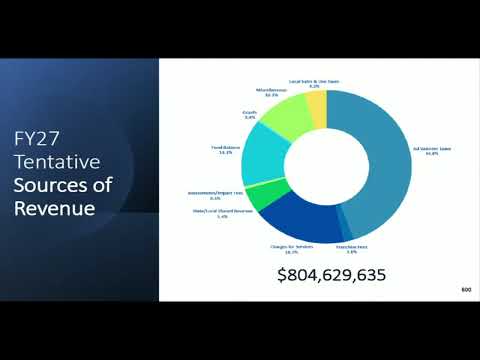
At a July 13 budget workshop, Martin County staff presented a tentative FY2027 budget that holds the county millage unchanged while funding public safety, infrastructure and two new board positions; officials warned a proposed statewide property‑tax amendment makes final tax bills uncertain and could force future reductions.
Martin County commissioners on July 13 reviewed the county's proposed fiscal year 2027 budget and tentatively approved a series of departmental and constitutional officer budgets while staff warned that a proposed statewide constitutional amendment on property taxes could change next year's revenues.
Stephanie Murley, director of the Office of Management and Budget, told the board the proposed plan keeps the millage rate unchanged and focuses on maintaining current service levels. The package includes two new board positions to strengthen cybersecurity and public records processing and reflects an overall FY27 increase of roughly 5.4% driven by inflationary pressures, contractual obligations and higher retirement contributions.
"This budget represents months of collaboration between county departments, our constitutional officers, the office of management and budget, and county administration," Murley said, noting the plan is a working document that the board may revise.
Jenny Fields, Martin County property appraiser, briefed commissioners on a proposed November constitutional amendment that would increase homestead exemptions in 2027–2029 and reduce the annual assessment cap for non‑homestead properties from 10% to 5%. Fields emphasized the amendment would change how taxable value is calculated but cannot by itself determine a homeowner's final tax bill because taxing authorities must still adopt millage rates and non‑ad valorem assessments next year.
"When people ask me how much money am I gonna save if this amendment passes, my answer today is the same: we simply do not know yet," Fields said, urging residents to read the amendment and follow local budget decisions.
The board took multiple tentative approvals during the workshop. Commissioners voted to tentatively approve the sheriff's FY27 request, the property appraiser's budget, the supervisor of elections's budget, the clerk's budget and a series of other constitutional and departmental budgets. Most motions passed unanimously; the administration budget passed 4–1 with Commissioner Vargas dissenting.
The county will publish tentative millage rates in TRIM notices to property owners; commissioners must set those maximum rates now but may only lower them before final adoption in September.
What happens next: the board will continue departmental reviews, may adjust line items before final hearings in September, and county staff said they could reconvene July 14 if more time is needed. The property‑tax amendment outcome in November will shape FY28 revenues and could prompt significant budget changes depending on the vote and subsequent millage decisions by all taxing authorities.