Get Full Government Meeting Transcripts, Videos, & Alerts Forever!
Get email alerts on the Infrastructure Water topic
No spam. Unsubscribe anytime.
Council reviews $3 million emergency loan resolution and water-recovery updates
Summary
The council reviewed a resolution to accept a $3,000,000 state emergency bridge loan to fund emergency repairs to the town's water and wastewater systems, discussed FEMA and Army Corps timelines and temporary fixes, and noted no recorded final vote in the provided transcript.
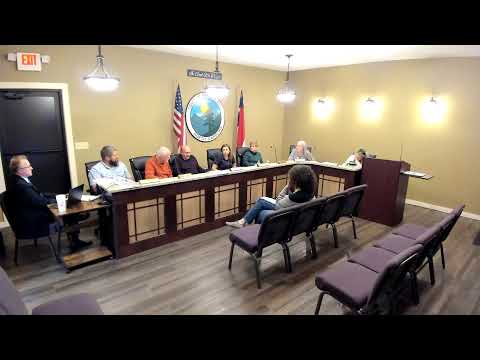
Bruce Mountain officials reviewed a resolution to accept an emergency state bridge loan of $3,000,000 intended for urgent repairs to the town’s drinking-water and wastewater systems and discussed ongoing recovery steps with FEMA and the U.S. Army Corps of Engineers.
Reading the proposed resolution, Bill said the loan would authorize the town to use funds for repairs and direct Town Manager Darlene Butler to provide information the state requires. “The town does hereby accept the emergency state emergency bridge loan offer of $3,000,000,” Bill read aloud, describing the loan as interest-free and available for repairs and interim expenditures.
Council members and staff reported that all but one water customer had service restored and that water samples taken last week returned satisfactory lab results, allowing the town to lift a boil-water advisory. Officials said one intake remains offline and that temporary measures (bypass piping and a temporary pump) could restore water to affected customers more quickly than full reconstruction, which the Army Corps has estimated could take up to six months for the entire project scope.
Speakers said FEMA has funded portions of the scope the town has described and that the Army Corps and its subcontractors are on site assessing damage. “They told us that less than two weeks they should be able to have water coming back,” one council member said about the temporary fixes; at the same time, council discussion stressed the need for written commitments and a clear timeline from federal partners.
The resolution was presented with a call for a vote, but the provided transcript does not include a recorded vote or final outcome. Council members also discussed mitigation funding for longer-term measures (raising pumps and electrical components) and noted the operational importance of nearby large users — two prisons that together use about 5,000,000 gallons per month.
Next steps described in the meeting included securing written scopes and timelines from the Army Corps, confirming FEMA-funded items in writing, and clarifying the short-term temporary pump work versus longer-term rebuilds before any final borrowing or mitigation actions are taken.