Get Full Government Meeting Transcripts, Videos, & Alerts Forever!
Get email alerts on the Land Use Ordinance topic
No spam. Unsubscribe anytime.
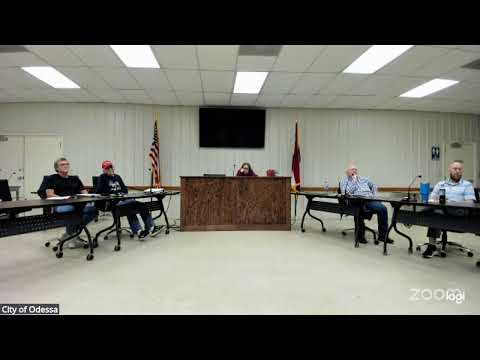
Odessa planners debate new ordinance to regulate shipping and portable storage containers
Summary
City staff presented a draft ordinance to regulate shipping and portable storage containers across zoning districts, proposing definitions, time limits (30‑day temporary use with extensions), setback and screening rules, and a 180‑day compliance period for existing containers; the board requested clarifications on wheels, stacking and enforcement capacity.
City planning staff presented a draft ordinance aimed at regulating shipping and portable storage containers across agricultural, residential, commercial and industrial districts, prompting extensive questions about definitions, duration, setbacks and enforcement.
“The purpose of this section is to regulate the placement and use of shipping containers and portable storage containers in a manner that, 1, allows reasonable business operations in commercial and industrial districts, protects adjacent residential neighborhoods from visual and operational impacts, establishes clear objective standards for duration, placement, and screening, and provides administrative flexibility through temporary use permits,” the staff member said, reading the ordinance purpose into the record.
Board members pressed staff to clarify definitions and enforcement mechanics. Several members asked whether wheeled trailers or containers permanently fixed to a pad should be treated differently; one member said, “If I did put a concrete pad and bolted it to the ground, then it's permanently fixed to the ground. So are we trying to say that I can't put that on my property?” Staff agreed to add language covering containers “with or without portable wheels” and to exclude common small backyard storage sheds from the shipping‑container definition.
On residential property, the draft would prohibit shipping containers as accessory structures while allowing one portable storage container per lot for a maximum of 30 days in a six‑month period (placement only on an approved hard surface), with a single administrative extension of 30 days. Board members debated raising the temporary limit to 45 or 60 days for moving scenarios; staff noted the extension process is available for longer moves.
Commercial rules proposed a maximum of two containers per lot with administrative site‑plan review, placement behind the principal structure when feasible, a 10‑foot minimum setback from residential zoning, and screening (6‑foot fence and/or evergreen landscaping) when containers are visible from public streets or adjacent residential property. Industrial districts would allow more flexibility but require building and fire safety compliance and, where industrial abuts residential, a 25‑foot setback and screening.
Staff proposed that all existing lawful containers be brought into compliance within 180 days of the ordinance’s effective date, with one administrative extension up to 90 days on showing good cause. The board discussed that enforcement is largely complaint‑based and said current code‑enforcement staffing (a half‑time officer) limits proactive inspections; staff said code enforcement prefers working toward compliance rather than immediate punitive steps.
The planner said the administration will draft a formal ordinance for the board’s next meeting and noted the city intends to budget for a Unified Development Ordinance (UDO) update starting April 1 and a comprehensive plan project in April 2027 to consolidate and modernize zoning and development rules.