Get Full Government Meeting Transcripts, Videos, & Alerts Forever!
Get email alerts on the Education Labor topic
No spam. Unsubscribe anytime.
Milwaukee school psychologists urge district to honor 2.63% CPI wage increase; district cites $46M shortfall and seeks delayed implementation
Summary
At a Milwaukee Public Schools bargaining session, school psychologists pressed the district to implement a full 2.63% CPI base-wage increase on July 1, 2026. District officials said budget pressures—including a reported $46 million deficit—and health-care and steps-and-lanes costs make timing a key issue and asked the unit to caucus.
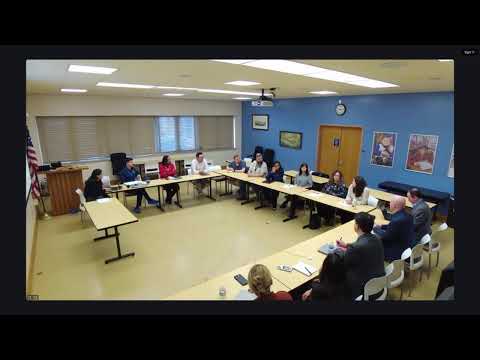
Milwaukee Public Schools (MPS) and a delegation of school psychologists met to continue contract bargaining over base wages limited under Wisconsin law to a CPI cap of 2.63%. The psychologists urged the district to implement the full CPI increase effective July 1, 2026, while district officials said budget constraints require considering delayed or split implementation options.
"We represent 172 school psychologists," said Dr. Semesager, a school psychologist at Milwaukee Public Schools, stressing the group’s high credentials and the department’s national recognitions. "Honoring the 2.63% CPI starting 07/01/2026 is a necessary investment in the legal, emotional, and academic stability of our schools," the speaker added, warning that anything less amounts to an effective pay cut as the cost of living rises.
MPS representatives framed their proposals around timing and sustainability. Larry Cote, director of employment relations, said the district’s bargaining scope under state law is limited to base wages capped at CPI and that the administration was offering implementation options that achieve the same 2.63% increase but with different timing. District staff provided estimated savings tied to implementation schedules: a split implementation option would save roughly $394,000 compared with an immediate full implementation, and a fully delayed January 1 option would save about $591,000.
MPS officials also described broader fiscal pressures. A district speaker stated the organization is navigating a roughly $46,000,000 deficit, expects health-care costs to rise (the transcript references a 5.8% increase), and estimated at least $8,000,000 would be required to fund steps-and-lanes increases across the workforce. The administration said it seeks to avoid structurally unsustainable raises that would force deeper cuts or freezes in later years.
Union representatives and psychologists pushed back on using staffing ratios or head-count comparisons alone to justify cuts. They said Milwaukee’s model assigns psychologists broader responsibilities—crisis response, Section 504 facilitation, and direct services—that make national per-student comparisons misleading. The delegation also described a $5,000,000 grant—structured over four years and linked with UW–Madison and Alverno—that could help fund positions and interns and asked the district to consider that pipeline when thinking about staffing and compensation.
After exchanging proposals and clarifying numbers, MPS asked both sides to caucus. The psychologists’ delegation said they would take the information back to members and could begin member conversations as early as the following day; they aimed to provide a response by Wednesday. The district emphasized the urgency for budget-planning timelines and asked for a prompt reply.
No formal motion or vote occurred during the session. The parties agreed to reconvene after the union’s member discussions to determine whether either of the district’s implementation options or an alternative could form a compromise.