Get Full Government Meeting Transcripts, Videos, & Alerts Forever!
Get email alerts on the Yemen Conflict topic
No spam. Unsubscribe anytime.
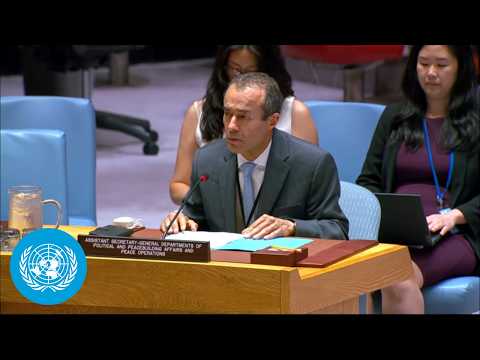
Security Council speaker warns of renewed escalation in Yemen after reported Iranian flights and Houthi response
Summary
A presenter at a Security Council meeting warned that reported Iranian flights to Houthi‑controlled airports and subsequent Houthi missile launches risk wider regional escalation, urging parties to engage in UN‑led negotiations and calling for the release of detained UN and civil‑society personnel.
A presenter addressing the Security Council warned that recent developments in Yemen risk a wider regional escalation and called on all parties to engage in United Nations–led negotiations to resolve the conflict.
The speaker said recent incidents — including a reported Iranian aircraft flight from Tehran to Sana'a International Airport on July 3 and an Iranian plane landing at Hudaydah Airport — have raised serious concerns about violations of Yemeni airspace and sovereignty. “There is no alternative to an inclusive Yemeni owned political process,” the presenter said, arguing that a negotiated political settlement under United Nations auspices can produce a durable solution.
The presenter cited a July 6 letter from the government of Yemen to the Security Council president and the Secretary‑General that views the reported flight as a violation of Yemen’s sovereignty. He also referenced reports of air strikes at Sana'a International Airport that, according to the presenter, the Houthis attributed to Saudi Arabia and which the Yemeni government says targeted the runway to prevent Iranian flights.
Pointing to subsequent developments, the presenter said the Houthis announced the end of the de‑escalation phase with Saudi Arabia and reportedly launched ballistic missiles that were intercepted. “We are deeply concerned about the risk of wider escalation,” the presenter said, urging restraint and diplomacy to prevent renewed military confrontation.
The speaker highlighted recent UN mediation efforts, noting that the UN special envoy for Yemen is actively engaging the parties and has contacted military representatives to urge de‑escalation. He cited a UN‑brokered truce in April 2022 that facilitated commercial flights between Sana'a and Amman as an example of practical steps achievable through negotiation. He also noted that, under UN auspices in May, the parties agreed to release over 1,600 conflict‑related detainees, calling that the largest such release since the start of the conflict.
The presenter said the special envoy received renewed assurances on July 11 from both the Yemeni government and the Houthis regarding implementation of that detainee deal and stressed that unilateral measures would not bring Yemen closer to peace. “We call on all actors to constructively engage in negotiations and the United Nations auspices,” he said, urging parties to choose dialogue over violence and to refrain from measures that could undermine prospects for peace.
The presenter reminded all parties to fully respect international law, including the United Nations Charter, international humanitarian law and international human rights law, and to uphold Yemen’s unity, sovereignty, independence and territorial integrity. He closed by calling for the immediate, safe and unconditional release of UN personnel, NGO staff and civil‑society members held in arbitrary detention and for full respect for the privileges and immunities of United Nations personnel.
The presenter concluded by reiterating the United Nations’ commitment to supporting Yemenis in restarting a political process and saying that regional de‑escalation would create a more conducive environment for reviving negotiations.