Get Full Government Meeting Transcripts, Videos, & Alerts Forever!
Get email alerts on the Capital Improvements topic
No spam. Unsubscribe anytime.
Ketchikan council begins work session to trim CIP, weigh rate increases and port electrification funding
Summary
At a special work session, the Ketchikan City Council reviewed a 1- and 5-year Capital Improvement Program in ClearGov, pressed staff to prioritize essential maintenance projects and explore new revenue rather than rely on drawing reserves, and discussed port electrification, a police drone program and reserve accounting.
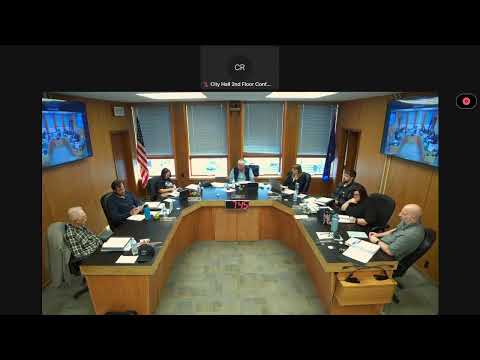
The Ketchikan City Council met in a special work session to review the draft Capital Improvement Program and give staff direction on which projects to prioritize amid rising construction costs and constrained utility reserves.
The meeting opened with roll call and a short presentation of the CIP packet and ClearGov online interface. Staff explained the ClearGov views for a one-year and five-year plan by department, project type and funding source and said the packet shows requested projects but has not been reconciled to current revenue forecasts. The Chair told the council the session’s purpose was “to give staff realistic direction that they can build a capital plan that is achievable, responsible, and aligned with our community priority.”
The council repeatedly emphasized prioritizing maintenance and essential services over expansion. One council member who reviewed the packet said: "What I've seen in there so far, I don't think we can cut our way out of this," and urged staff to seek new revenue sources rather than simply deferring projects. The Chair warned of fiscal stress, stating that, "last year's budget, we spent $28,000,000 more than we took in," and flagged a KPU revenue reserve total cited in the work materials of $53,743,000 as a concern for sustainability.
Members discussed concrete steps to reduce near-term capital demand, including renting seasonal equipment rather than purchasing, sharing vehicles between departments, shortening replacement cycles for high-mileage fleet vehicles and asking departments to identify core, legally required services. "If we can reduce the amount that we have to raise," the Chair said, "that's not K."
Ports and electrification drew sustained debate. Several council members opposed expanding berths while existing docks remain under-maintained and raised overtourism and crowding as reasons to defer expansion. Staff told the council the state legislature had provided just over $9,000,000 toward port electrification and that the city could use that as matching capacity for federal funding but would need backbone upgrades (transformers, transmission) to support electrification.
Public-safety equipment priorities also came under scrutiny. Council members questioned why a proposed police drone program was listed ahead of vehicle and equipment replacements when several police projects scored closely. Supporters cited past operational value — locating people in dense terrain and assisting emergency responses — while others warned of redundancy with fire department capabilities and of recurring training and certification costs. One council member told staff she found "the silence from the cruise industry... definitely deafening" when discussing potential industry contributions to infrastructure needs.
The council pressed staff for clearer reserve accounting. Members asked for reserve targets to be shown as dollar amounts per fund (not only percentage targets) and requested clarification about which funds are designated or restricted versus those that are general reserves. Staff said the budget’s summary page (C‑1) will show those dollar targets once operating numbers for 2027 are finalized; they also described options for designating a portion of a proposed 3% rate increase as an earmark for long-term liabilities such as landfill closure.
Other items raised included library funding negotiations with the borough (operations funded through Dec. 31, borough-led discussion expected next month), a request for an electrification impact report with numbers on potential utility revenue, and multiple requests that departments provide more specific descriptions for broadly worded requests in the packet.
Next steps: staff will work with the manager and finance to reconcile the CIP requests with revenue forecasts and return a narrower, fundable CIP that focuses on essential, high-priority maintenance. Council members asked for additional briefings (electrification feasibility and impacts, clearer reserve breakdowns) and signaled more work sessions during the budget process. No policy or appropriation votes were taken at the session.
The council reconvened to the special meeting for closing remarks; members offered condolences for a recent local fatality and thanked first responders before adjourning.