Get Full Government Meeting Transcripts, Videos, & Alerts Forever!
Get email alerts on the Municipal Finance topic
No spam. Unsubscribe anytime.
Odessa aldermen adopt CIP and fee schedule, approve new electric connection rules and opt-in ECA refunds
Summary
The Odessa Board of Aldermen approved the FY 2026–27 capital improvement plan and a revised fee schedule that changes how electric connection costs are billed, passed an ordinance requiring developer agreements for residential extensions, and set an opt‑in refund window for prior Electric Cost Adjustment (ECA) charges. The board directed staff to hold refund funds in a separate account and expanded administrative outreach.
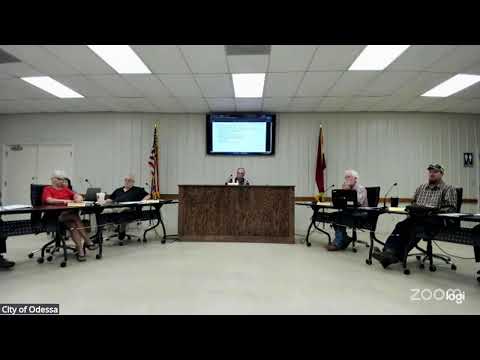
The Odessa Board of Aldermen on March 25 adopted the city’s capital improvement plan and a revised fee schedule and approved changes to electrical service rules intended to shift on-site installation work and invoicing responsibility to developers.
The board approved Resolution No. 2026-10 adopting the CIP and then considered Resolution No. 2026-11, a comprehensive fee schedule staff said includes new electric connection fees. Staff described the change as a move to a connection‑fee model similar to water and sewer: electricians or developers would perform conduit installation and pay a connection fee rather than the city’s electric crew itemizing and invoicing every material and labor step.
"This allows us to actually work on our system now and get the projects done that have been on our list for years," staff said in explanation of the fee structure. "It takes a huge burden off of our electric department," staff added.
At the same time the board advanced Ordinance No. 2026-09, which was amended to require developer agreements for residential developments and to require conduit (not direct burial) for primary electric lines. Staff said the changes are intended both to clarify responsibilities and to reduce billing friction that previously required crews to produce highly itemized invoices.
The board also approved a staff proposal to offer a voluntary, opt-in refund to residents who may have been charged excess ECA amounts in prior years. Staff described a calculation tool that will use a resident’s utility account number to compute each household’s credit; refunds will be issued as credits to active accounts or as checks for former customers. The initial window discussed was 60 days (March 30–May 29), but the board moved toward a longer window and administrative safeguards.
City attorney counsel warned the board the refunds are a voluntary customer-service transaction and not an admission of legal liability. "We are providing a customer service transaction here so that the monies are not identifiable, or admitted to be due," the city attorney said, noting that leftover amounts could be carried as a liability and handled later under unclaimed‑property rules if claimants do not come forward.
Board members pressed staff on outreach to low‑tech or relocated residents and on what would happen to residual funds if not everyone claims a refund. The board reached a consensus to keep the refunded liability in a separate bank account, extend the outreach window (discussion moved from 60 toward 90 days), and provide clearer notification options for residents who cannot complete the online form.
All votes on the CIP, fee schedule and related ordinances carried; staff said the refund credits will be processed over a period of months after residents submit the required account information and waiver.
The board asked staff to return with details on notification plans and a timeline for carrying the liability and for any potential future unclaimed‑property filing.