Get Full Government Meeting Transcripts, Videos, & Alerts Forever!
Get email alerts on the Parks Recreation topic
No spam. Unsubscribe anytime.
GreenTree council schedules August workshop after Athletic Association pushes turf and infill options for ballfields
Summary
GreenTree Athletic Association leaders urged the borough to pursue longer‑term fixes for Hemlock 1 and 2, including turf options. Council asked staff for a cost‑benefit analysis, signaled interest in grant funding and agreed to a dedicated workshop in August to study turf, infill, and maintenance tradeoffs.
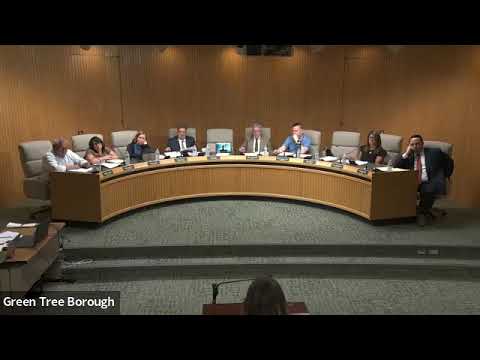
Tim Big Garrett, president of the GreenTree Athletic Association, told the borough council on July 6 that the borough’s primary youth baseball and softball fields are repeatedly unplayable after rain and that recurring “band‑aid” fixes are costing volunteers and borough staff time.
"After a couple heavy rains ... the conditioner washes away, and we're left with the dirt," Garrett said, urging the borough to solicit bids and explore turf as a more durable option. He said Hemlock 1 and Hemlock 2 are the priority fields; Aiken 1 and Aiken 2 are open to public use and in worse condition.
Council members and public witnesses discussed three broad options: periodic regrading and fill (an infield resurfacing earlier described as roughly $30,000 per infield, a short‑term fix), full field turfing (estimates discussed up to $1.2 million for both primary fields), and a middle approach to turf only the infields (an "infill" option discussed in the meeting with a contractor estimate of roughly $260,000 for both infields).
Councilor (speaker 1) framed the discussion as preliminary and said staff and engineers should review the competing bids before any spending. "We don't expect to vote tonight to spend $1.2 million," the councilor said, but emphasized the need to begin planning.
Multiple council members recommended seeking grant funding to offset costs; one councilor pointed to the likelihood that such a large capital project would be scheduled for 2027. Residents and a former public‑works director who spoke from the audience encouraged the council to prioritize the fields and to include coaches and volunteers in planning.
The council agreed to a next step: council asked borough staff to compile a cost‑benefit analysis, verify the scope of contractor bids and research grant options. Council scheduled a full workshop on August 10 dedicated to ballfield options and invited the planning commission and the GAA to participate.
The workshop is intended to assemble engineers’ analyses, grant‑funding research and usage assumptions to allow council to compare lifecycle costs for continued patching versus partial or full turf replacement.
Ending: Council members asked staff to return to the August workshop with engineered comparisons, possible grant sources and sample maintenance agreements so the borough can weigh capital outlay against reduced downtime and volunteer/staff burden.