Get Full Government Meeting Transcripts, Videos, & Alerts Forever!
Get email alerts on the School Finance Levy topic
No spam. Unsubscribe anytime.
Strongsville board approves 6.7‑mill levy resolution, leaves income‑tax alternative certified for state review
Summary
The Strongsville Board of Education passed a resolution declaring it necessary to levy an additional 6.7 mills and also voted to request state certification of an $18,533,920 annual ask that could be raised by either a property levy or a school income tax. Board members narrowed options and agreed to dissolve the 070 fund; public commenters strongly opposed an income tax.
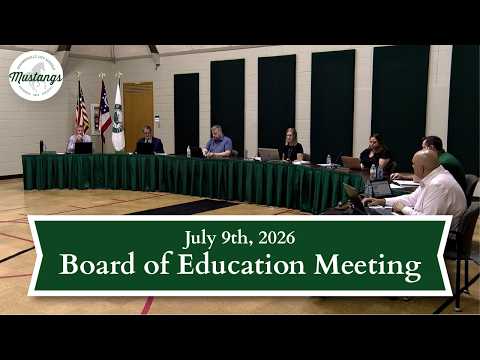
The Strongsville Board of Education on July 9 passed a resolution declaring it necessary to levy an additional 6.7‑mill property tax for five years and voted a second resolution requesting the Ohio Department of Taxation certify rates to raise $18,533,920 annually, either via property tax or a school district income tax.
The first resolution—describing a 6.7‑mill ad valorem levy outside the 10‑mill limitation for tax year 2026 with first collection in calendar year 2027—passed on a motion by Michelle, seconded by Eric (roll call recorded and motion passed). The board then approved a related resolution asking the state to estimate rates to produce $18,533,920 if the board pursues either a property‑tax or a school income‑tax option.
Why it matters: the two votes keep multiple paths open while meeting statutory deadlines for ballot certification. The board narrowed the district’s preferred options into a small slate—property millage options in the roughly 6.4–6.7 range and a dollar‑target income tax option near $15,000,000—so staff can seek the Department of Taxation’s certification in time for the August 5 filing deadline.
Public comments at the start of the meeting were strongly skeptical of a school income tax. Resident Bonnie Tennis urged the board to preserve the existing renewal levy because converting it could cost Strongsville homeowners through the loss of homestead and rollback reimbursements; she said in the board’s February forecast the state reimbursements for the renewal levy were “over $800,000” a year and cautioned that merging levies could shift roughly $3,000,000 over five years away from local homeowners. “This should be left to the voters to decide on talking about renewal levy,” she said.
Other public speakers echoed distributional concerns. Jason Heckman told the board, “If you just take away property tax and replace it with income tax, all of those businesses are now off the hook of paying for the community they directly benefit from.” Parent Kelly Kosick urged the board not to pursue an income tax and argued a property levy provides a steadier revenue stream for budgeting and bonding.
Staff and board discussion: Treasurer George explained the technical differences between a traditional school income tax (a broad base that can include interest, dividends and some retirement income) and an earned‑income tax (wages and similar compensation only), and showed collection timing models. Example estimates in the presentation included a 0.5% traditional income tax generating about $12.2 million (roughly equivalent to a 5.3‑mill property levy) and an earned 0.5% generating about $8.9 million (≈3.84 mills). George warned that state rules require income‑tax percentages be rounded to 0.25% increments and that the Department of Taxation provides the final certification after the board delivers a dollar amount.
Board members resolved to narrow choices for the public and the filing: a property‑tax ask in the 6.4–6.7 mill range (6.7 was explicitly included in the resolution read into the record) and an income‑tax alternative presented as a dollar amount so the state can compute the appropriate percentage. Members also agreed to propose dissolving the 070 fund and moving its balance back to the general fund to remove it as a political talking point, while acknowledging that the fund would buy only one additional year of cash on hand.
Votes and next steps: the 6.7‑mill resolution passed on the record; the board also passed the resolution requesting state certification for the $18,533,920 annual amount. Staff will submit the required materials to the county fiscal office and to the Department of Taxation and return to the board at a special meeting to accept certifications and finalize ballot language. The board set tentative special‑meeting dates (July 28 and July 30 were discussed) to allow time for public comment and final decisions.
What remains unresolved: board members repeatedly emphasized messaging and voter trust; several members said income‑tax proposals have fared poorly in neighboring districts and that the board needs clearer outreach before asking voters to adopt a new tax structure. The board asked staff to prepare precise dollar and millage figures, voter‑facing explanations of overlap years and collection timing, and an outreach plan ahead of any final vote to place measures on the ballot.
Authorities cited in the meeting: the resolutions referenced sections 5705.03 and 5705.21 and section 5748.01 of the Revised Code (read into the record during the resolution language).